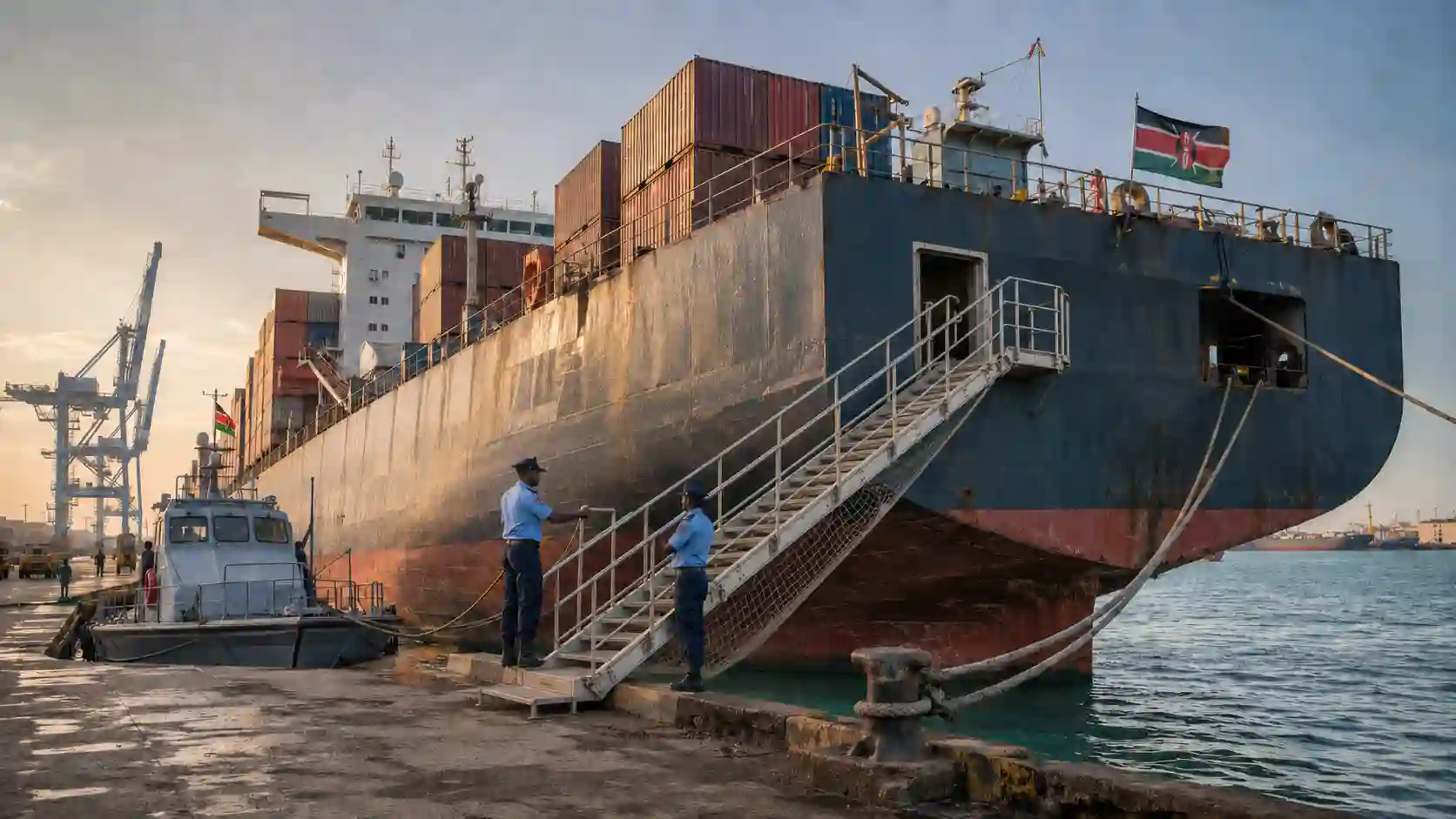
Strategic Legal, Regulatory and Commercial Considerations for Shipowners, Cargo Interests, Marine Insurers, Financiers, Offshore Operators and Maritime Stakeholders
Executive Summary
Kenya’s admiralty and maritime enforcement framework continues to assume increasing strategic importance within East Africa’s shipping, logistics, offshore infrastructure, marine insurance, trade finance, and international commerce ecosystem.
As the Port of Mombasa consolidates its position as a principal gateway for regional and international trade, maritime disputes involving vessel arrests, cargo recovery proceedings, ship mortgage enforcement, marine insurance claims, charterparty disputes, and cross-border enforcement actions are becoming increasingly prominent within Kenya’s maritime jurisdiction.
Kenya’s admiralty regime is principally governed by the Judicature Act, the Merchant Shipping Act, the High Court (Admiralty) Rules, applicable international maritime conventions incorporated into Kenyan law, and common law principles substantially influenced by English admiralty jurisprudence and international maritime practice.
Under Section 4 of the Judicature Act, the High Court of Kenya exercises exclusive admiralty jurisdiction in conformity with international maritime law and the jurisdiction formerly exercised by the High Court of Justice in England under the Senior Courts Act 1981. This gives the High Court broad powers relating to vessel arrests, maritime liens, cargo detention and recovery, ship mortgage enforcement, judicial sale of vessels, preservation of maritime assets, marine insurance disputes, collision and salvage claims, and recognition and enforcement of foreign maritime judgments and arbitral awards.
Vessel arrest remains one of the most powerful remedies available in maritime commerce because it enables claimants to secure claims against highly mobile maritime assets while preserving recovery rights pending determination of disputes.
As Kenya’s blue economy and maritime sectors continue to expand, admiralty enforcement strategy, maritime risk management, cross-border recovery mechanisms, and regulatory compliance frameworks are expected to become increasingly important within East Africa’s evolving shipping and trade environment.
Kenya’s Strategic Importance as a Maritime Enforcement Hub
Kenya occupies a strategically important position within regional and international maritime trade routes through the Port of Mombasa and the Northern Corridor logistics network connecting East and Central Africa to global markets.
The continued growth of maritime commerce, offshore infrastructure investment, regional trade integration, energy projects, logistics development, and blue economy initiatives has significantly increased exposure to maritime disputes involving cargo recovery, vessel financing arrangements, charterparty disputes, offshore logistics claims, trade finance defaults, marine insurance recoveries, and cross-border enforcement proceedings.
This evolving commercial environment has elevated the importance of effective admiralty enforcement mechanisms capable of preserving maritime assets and securing recovery rights.
Unlike conventional commercial assets, vessels are inherently mobile and may rapidly depart jurisdictions, thereby creating substantial enforcement risks for cargo interests, marine insurers, financiers, offshore operators, and maritime creditors. Vessel arrest therefore remains a critical legal mechanism for preserving assets and securing maritime claims before assets are moved beyond the reach of local courts.
The Admiralty Registry of the High Court at Mombasa continues to play a central role in handling disputes arising from shipping operations, offshore activities, cargo claims, port and terminal operations, vessel financing disputes, and international trade and logistics transactions.
Kenyan courts are increasingly being called upon to adjudicate disputes involving complex international shipping structures, offshore special purpose vehicles (SPVs), international arbitration agreements, marine insurance recoveries, sanctions exposure, commodity trading arrangements, and multi-jurisdictional asset tracing proceedings.
The increasing sophistication of East Africa’s maritime economy has consequently intensified the need for commercially focused admiralty enforcement strategies, proactive risk management frameworks, and coordinated cross-border recovery mechanisms.
Admiralty Jurisdiction of the High Court of Kenya
The High Court of Kenya exercises exclusive admiralty jurisdiction pursuant to Section 4 of the Judicature Act and related maritime legislation.
Kenya’s admiralty jurisdiction remains heavily influenced by English admiralty law principles and international maritime practice. The High Court may hear and determine claims relating to ship ownership disputes, ship mortgage enforcement, maritime liens, cargo damage, carriage of goods by sea, charterparty disputes, collision liabilities, salvage claims, towage disputes, marine pollution claims, crew wage disputes, marine insurance claims, and recognition and enforcement of foreign maritime judgments and arbitral awards.
A significant authority on Kenya’s admiralty jurisdiction is Owners of the Motor Vessel “Lillian S” vs. Caltex Oil (Kenya) Ltd [1989] KLR 1. Although not strictly a vessel arrest matter, the Court of Appeal established the foundational principle that jurisdiction is everything and that a court acting without jurisdiction must immediately “down its tools.” The decision remains central to Kenyan admiralty jurisprudence because vessel arrest proceedings are highly jurisdiction-sensitive and require strict compliance with procedural and substantive admiralty requirements.
In Priyantha & 8 others vs. Owners of the Vessel “FV Maab Aqua 2” & another [2025] KEHC 8678 (KLR), the High Court reaffirmed that claims relating to crew wages, disbursements, and repatriation expenses constitute maritime claims enforceable in rem and fall within the exclusive admiralty jurisdiction of the High Court.
The Court further clarified that:
-
crew wage claims enjoy elevated protection under maritime law;
-
admiralty claims may properly be pursued in rem against the vessel itself; and
-
the High Court remains the only court vested with admiralty jurisdiction in Kenya under Section 4 of the Judicature Act.
The decision reinforces the long-established jurisprudential principle that seafarer welfare and crew wage protection remain fundamental pillars of international maritime law.
Kenyan courts increasingly recognize the commercial realities of modern shipping and international trade, particularly where disputes involve complex financing structures, offshore investment vehicles, international logistics arrangements, commodity trading transactions, and multi-jurisdictional enforcement considerations.
Claims in Rem and Claims in Personam
A distinguishing feature of admiralty law is the distinction between proceedings in rem and proceedings in personam, both of which carry significant procedural, jurisdictional, and strategic implications in maritime litigation and enforcement proceedings.
A claim in rem is brought directly against the vessel or maritime property itself. In such proceedings, the ship is treated as the offending instrument and may be arrested as security for the maritime claim. Claims in rem are particularly important because they enable claimants to secure recovery against highly mobile maritime assets irrespective of whether the shipowner is physically present within the jurisdiction.
Claims in rem commonly arise in matters involving vessel arrests, maritime liens, cargo damage, salvage claims, crew wage claims, ship mortgage enforcement, collision liabilities, and certain charterparty and freight disputes.
For example, where cargo carried aboard a vessel is damaged during transit due to alleged unseaworthiness of the vessel, negligent handling of cargo, or breach of carriage obligations under a Bill of Lading, the cargo owner may commence admiralty proceedings in rem directly against the vessel and seek its arrest while the ship is within Kenyan territorial waters or at the Port of Mombasa.
Similarly, where a lender has financed acquisition of a vessel and the shipowner defaults under the mortgage facility, the lender may institute proceedings in rem against the vessel itself and seek judicial sale of the ship to recover outstanding indebtedness.
Crew wage claims also frequently proceed in rem because maritime law accords special protection to seafarers. Where crew members remain unpaid, they may institute proceedings directly against the vessel and seek arrest orders to secure payment of outstanding wages, repatriation expenses, and related entitlements.
By contrast, a claim in personam is brought directly against the legal person or entity liable for the claim, such as the shipowner, charterer, operator, insurer, freight forwarder, terminal operator, or contracting party. These claims proceed in the ordinary manner of civil litigation and do not automatically entitle a claimant to arrest a vessel.
Claims in personam generally arise where the dispute is founded upon personal contractual obligations, commercial liabilities, or tortious conduct attributable to a specific legal entity rather than the vessel itself.
For example, where a charterer fails to pay agreed freight charges under a charterparty agreement, the shipowner may institute proceedings in personam directly against the charterer for recovery of the unpaid contractual debt.
Similarly, where a marine insurer wrongfully repudiates insurance cover under a marine insurance policy, proceedings may be brought in personam against the insurer for breach of contract.
Where a logistics operator or freight forwarder negligently mishandles shipping documentation causing commercial losses, proceedings may be instituted in personam against the responsible entity without necessarily grounding a maritime claim against the vessel itself.
Likewise, disputes involving unpaid consultancy fees, procurement contracts, offshore support services, or commercial agency arrangements connected to maritime operations may proceed purely in personam where the claim does not attach directly to the vessel as maritime property.
The distinction between claims in rem and claims in personam is jurisprudentially significant because vessel arrest remedies are generally only available where a valid admiralty claim exists in rem.
In Kyu vs. Owners of the Vessel “M.V. AHADI 001” [2023] KEHC 18669 (KLR), the High Court set aside warrants of arrest issued against the Motor Fishing Vessel “Ahadi 001” after determining that the underlying dispute constituted a claim in personam rather than a proper admiralty claim in rem.
The Court reaffirmed several important admiralty principles, including that:
-
Vessel arrest proceedings must be founded upon recognized maritime claims;
-
Not every commercial dispute connected to shipping qualifies as an admiralty claim in rem;
-
Admiralty jurisdiction cannot be improperly invoked to secure ordinary commercial claims lacking a maritime character; and
-
Courts will closely scrutinize the legal basis upon which vessel arrest remedies are sought.
The decision therefore underscores the importance of correctly characterizing maritime claims before initiating admiralty enforcement proceedings.
This distinction is particularly important in practice because improperly framing an ordinary contractual or commercial dispute as an admiralty claim may expose claimants to discharge of arrest orders, wrongful arrest claims, damages for unlawful detention of vessels, adverse costs orders, commercial disruption liabilities, and reputational exposure.
From a strategic enforcement perspective, proceedings in rem often provide significantly stronger leverage because arrest of a vessel may interrupt shipping operations, delay cargo movements, affect charterparty obligations, disrupt financing arrangements, and create immediate commercial pressure for settlement or provision of security.
Accordingly, proper classification of maritime claims remains a critical aspect of admiralty litigation strategy, maritime risk management, and cross-border enforcement planning.
Vessel Arrests in Kenya
A vessel arrest is a court-authorized process through which a ship is detained as security for a maritime claim pending determination of legal proceedings or settlement of the dispute.
Vessel arrest proceedings remain strategically important because they secure maritime claims, preserve assets pending recovery, establish jurisdictional control, prevent disposal or movement of vessels, facilitate commercial settlement negotiations, and protect creditors against asset dissipation risks.
Arrest proceedings commonly arise in disputes involving cargo loss or damage, mis-delivery claims, unpaid freight, charterparty breaches, marine insurance disputes, ship mortgage defaults, crew wage claims, bunker supply disputes, salvage claims, collision liabilities, port charges, and offshore logistics operations.
In Pembe Flour Mills Ltd vs. Owners of the Motor Vessel “Ioannis G” [2017] eKLR, the High Court considered the relationship between admiralty proceedings and foreign arbitration clauses incorporated within maritime contracts.
The Court reaffirmed several important principles:
-
Parties to maritime contracts are generally bound by agreed arbitration and jurisdiction clauses;
-
Bills of Lading and charterparties remain central contractual instruments in maritime commerce; and
-
Kenyan courts may stay admiralty proceedings where disputes are contractually subject to foreign arbitration agreements.
The case reflects Kenya’s increasing alignment with international commercial arbitration principles and demonstrates judicial willingness to uphold contractual dispute resolution mechanisms in maritime commerce.
Applications for vessel arrest are frequently made on an urgent and ex-parte basis given the mobility of maritime assets. Claimants may seek warrants of arrest, preservation orders, security for claims, freezing relief, disclosure orders, and ancillary enforcement measures designed to preserve recovery rights.
Release of arrested vessels may occur through court orders, negotiated settlement arrangements, provision of security, bank guarantees, P&I Club Letters of Undertaking (LOU), or satisfaction of the underlying claim.
An LOU is a binding financial guarantee issued by a ship’s Protection and Indemnity (P&I) Club to a claimant. It promises to pay a final court judgment or settlement in exchange for the claimant releasing or agreeing not to arrest the vessel.
Failure to promptly resolve vessel arrest disputes may expose owners and operators to substantial commercial disruption, including port detention costs, demurrage exposure, charterparty breaches, cargo delays, cargo damage, insurance complications, supply chain disruption, and reputational damage.
Maritime Liens, Cargo Claims and Maritime Financing
Certain maritime claims constitute maritime liens capable of attaching directly to vessels irrespective of ownership changes. Maritime liens commonly arise in relation to crew wages, salvage claims, collision damage, port charges, and certain statutory maritime obligations.
Such claims may enjoy elevated enforcement priority and materially affect ship financing structures, judicial sale proceedings, insolvency matters, mortgage enforcement rights, and asset recovery proceedings.
Cargo disputes remain among the most common maritime claims within Kenyan jurisdiction and frequently arise from cargo shortages, mis-delivery, delay, contamination, transit damage, documentary discrepancies, improper storage, and breach of carriage obligations including those arising out of fraudulent engagements with fraudulent companies specifically incorporated to defraud shippers.
The governing legal framework includes the Merchant Shipping Act, the Carriage of Goods by Sea Act, applicable international maritime conventions, Bills of Lading, charterparties, and common law principles.
Kenyan courts frequently give substantial weight to governing law clauses, arbitration agreements, jurisdiction clauses, international shipping practice, and persuasive English admiralty authorities.
In Jamal Mohamed Bandira vs. Owners of the Motor Vessel “Nasibu” [2020] KECA 671 (KLR), the Court of Appeal considered claims arising from vessel detention, operational expenses, and allegations of wrongful arrest.
The Court emphasized several important admiralty principles:
-
Wrongful arrest claims may expose claimants to damages where arrests are improperly obtained;
-
Vessel detention may generate substantial operational and commercial losses; and
-
Parties seeking arrest remedies must exercise good faith and comply strictly with admiralty procedural requirements.
The decision demonstrates the potentially significant financial consequences associated with improperly instituted vessel arrest proceedings.
The continued growth of maritime financing and vessel acquisition structures has similarly increased the importance of ship mortgage enforcement within Kenya’s maritime sector. Ship mortgages remain particularly important in vessel financing transactions, offshore infrastructure projects, fleet acquisitions, marine asset securitization arrangements, and international trade financing structures.
Where defaults arise, financiers may pursue vessel arrests, judicial sale of ships, enforcement of maritime securities, receivership remedies, and cross-border recovery proceedings.
Proper vessel registration and mortgage registration therefore remain essential to ensuring enforceability of maritime security interests.
Enforcement of Foreign Judgments and Arbitral Awards
The increasingly international nature of maritime commerce has resulted in growing reliance on cross-border dispute resolution mechanisms, including foreign court judgments and international maritime arbitration.
Kenyan courts generally recognize and enforce foreign judgments and arbitral awards subject to compliance with applicable statutory and procedural requirements, including:
-
The Foreign Judgments (Reciprocal Enforcement) Act;
-
The Arbitration Act, 1995;
-
The New York Convention on the Recognition and Enforcement of Foreign Arbitral Awards; and
-
Applicable principles of public policy and procedural fairness.
Maritime disputes frequently involve arbitration clauses referring disputes to London, Singapore, Dubai, Paris, or other major international arbitral centres. Enforcement proceedings may subsequently arise against vessels, cargo, or maritime assets located within Kenyan jurisdiction.
Accordingly, effective maritime enforcement increasingly requires coordinated cross-border recovery strategies capable of tracing, preserving, and enforcing against assets across multiple jurisdictions.
CM Advocates LLP is able to advise and act in relation to enforcement proceedings involving foreign maritime judgments and international arbitral awards through our Global Enforcement & Asset Recovery Unit (GEARC).
Our GEARC team routinely advises on recognition and enforcement of foreign judgments, enforcement of arbitral awards, cross-border asset-tracing and recovery, international fraud and asset dissipation risks, multi-jurisdictional enforcement coordination, offshore asset recovery structures, and emergency preservation and injunctive relief.
Marine Insurance, Offshore Risk and ESG Exposure
Marine insurers and Protection & Indemnity (P&I) Clubs continue to play a central role in maritime enforcement and recovery proceedings.
Disputes commonly arise concerning cargo liabilities, pollution exposure, collision claims, crew claims, salvage liabilities, general average, hull and machinery losses, and trade documentation disputes.
At the same time, marine insurers and maritime financiers are increasingly scrutinizing Environmental, Social, and Governance (ESG) standards compliance, operational governance standards, maritime cybersecurity, crew welfare protections, sanctions exposure, environmental compliance systems, and supply chain resilience frameworks.
Failure to maintain adequate compliance systems may materially affect insurance recoverability, financing arrangements, and claims handling outcomes.
Kenya’s expanding blue economy continues to generate significant maritime legal and regulatory exposure across sectors including offshore oil and gas, Liquefied Natural Gas (LNG) infrastructure, fisheries and aquaculture, marine tourism, port development, renewable marine energy, subsea cable infrastructure, and maritime logistics.
Maritime stakeholders are therefore facing increasing scrutiny regarding carbon emissions and decarbonization obligations, marine pollution prevention, sustainability governance, climate transition obligations, and maritime cybersecurity preparedness.
The convergence between maritime regulation, ESG obligations, international trade governance, operational resilience, and supply chain compliance is expected to intensify significantly in coming years.
Maritime Fraud, Trade Diversion and Cross-Border Recovery Risks
Kenya’s growing role in regional trade and logistics has also increased exposure to fraudulent Bills of Lading, cargo diversion schemes, documentary trade fraud, customs irregularities, illicit transshipment activities, false shipping documentation, asset concealment structures, and trade finance fraud.
Such disputes increasingly require integrated legal strategies involving vessel arrests, asset tracing, cross-border enforcement, emergency injunctive relief, customs coordination, international arbitration, and multi-jurisdictional recovery proceedings.
Maritime stakeholders should therefore maintain robust trade compliance systems, documentation controls, counterparty due diligence procedures, fraud detection mechanisms, and enterprise risk management frameworks.
Regional Maritime and Port Advisory Capability
CM Advocates LLP is strategically positioned to advise and represent clients in relation to shipping, logistics, offshore, admiralty, and maritime enforcement matters connected to major regional ports and maritime corridors across East Africa.
Our regional capability extends to matters involving:
-
Port of Mombasa;
-
Lamu Port and the Lamu Port-South Sudan-Ethiopia Transport (LAPSSET) Corridor;
-
Port of Dar es Salaam;
-
Port of Tanga;
-
Zanzibar Port; and
-
Inland logistics and transport corridors serving East and Central Africa.
This regional capability enables us to support clients in relation to cross-border shipping disputes, vessel arrest proceedings, cargo recovery actions, offshore logistics and infrastructure projects, maritime regulatory compliance, marine insurance recoveries, customs and trade investigations, and regional enforcement and asset recovery strategies.
How CM Advocates LLP Can Assist
CM Advocates LLP provides integrated legal, regulatory, enforcement, and strategic advisory services across maritime, admiralty, logistics, offshore, infrastructure, international trade, environmental, transport, and blue economy sectors throughout Kenya and the wider East African region.
Our multidisciplinary maritime practice combines deep sectoral knowledge with sophisticated cross-border dispute resolution, admiralty enforcement, regulatory compliance, asset recovery, and commercial advisory capabilities tailored to the needs of shipowners, charterers, cargo interests, marine insurers, offshore operators, financiers, commodity traders, logistics providers, port operators, investors, and international trading enterprises.
Our services include advising and acting on admiralty and maritime litigation, vessel arrest proceedings, ship mortgage enforcement, cargo recovery claims, charterparty and Bills of Lading disputes, marine insurance and P&I claims, maritime fraud investigations, asset tracing and recovery strategies, vessel registration and financing transactions, port and terminal liability disputes, offshore energy and marine infrastructure projects, cabotage and local content compliance, maritime labour advisory, marine environmental liability matters, customs and shipping compliance, maritime sanctions advisory, crisis response management, and enforcement of foreign maritime judgments and arbitral awards.
CM Advocates LLP further maintains dedicated practice groups in Blue Economy & Admiralty Law, Civil Fraud, Asset Tracing & Recovery (CFAR), and the Global Enforcement & Asset Recovery Unit (GEARC) within our Dispute Resolution and Appellate Practice Group. These teams routinely advise on sophisticated maritime enforcement proceedings, cargo recovery actions, marine insurance disputes, offshore logistics claims, fraud-linked trade disputes, vessel arrests, enforcement of arbitral awards, and multi-jurisdictional recovery strategies across East Africa and beyond.
Our integrated maritime enforcement capability enables us to support clients where shipping and cargo losses involve fraudulent trade documentation, cargo diversion and mis-delivery, asset concealment risks, customs and trade compliance irregularities, offshore ownership structures, supply chain disruption risks, and emergency preservation or injunctive relief.
We also advise shipowners, operators, marine insurers, lenders, commodity traders, offshore contractors, logistics providers, and institutional investors on maritime governance structures, vessel financing arrangements, operational compliance systems, ESG obligations, maritime cybersecurity, sanctions exposure, and strategic blue economy regulatory matters across East Africa.
Our maritime practice is further strengthened by our operational presence in Mombasa — East Africa’s principal maritime gateway — and our regional capability across multiple African jurisdictions, enabling us to support domestic and international stakeholders navigating complex shipping, logistics, offshore, enforcement, and investment environments.
Contact Details
Blue Economy & Admiralty Practice
E: blueeconomy@cmadvocates.com
Civil Fraud, Asset Tracing & Recovery (CFAR) Practice
Global Enforcement & Asset Recovery Unit (GEARC)
CM Advocates LLP – Contact Details
Head Office – Nairobi
I&M Bank House, 7th Floor
2nd Ngong Avenue, Nairobi, Kenya
E: law@cmadvocates.com
Mombasa Office
Links Plaza, 3rd Floor
Links Road, Nyali, Mombasa, Kenya
E: mombasaoffice@cmadvocates.com
Regional Offices
Uganda | Tanzania | Rwanda | Zambia | Ethiopia | South Sudan
Disclaimer
This CM Regulatory Alert is issued for general information purposes only and does not constitute legal advice. Specific legal advice should be sought for particular vessel arrest proceedings, maritime disputes, cargo claims, marine insurance matters, ship financing transactions, offshore infrastructure projects, maritime enforcement actions, trade finance disputes, environmental compliance obligations, enforcement of foreign judgments or arbitral awards, or maritime regulatory matters.