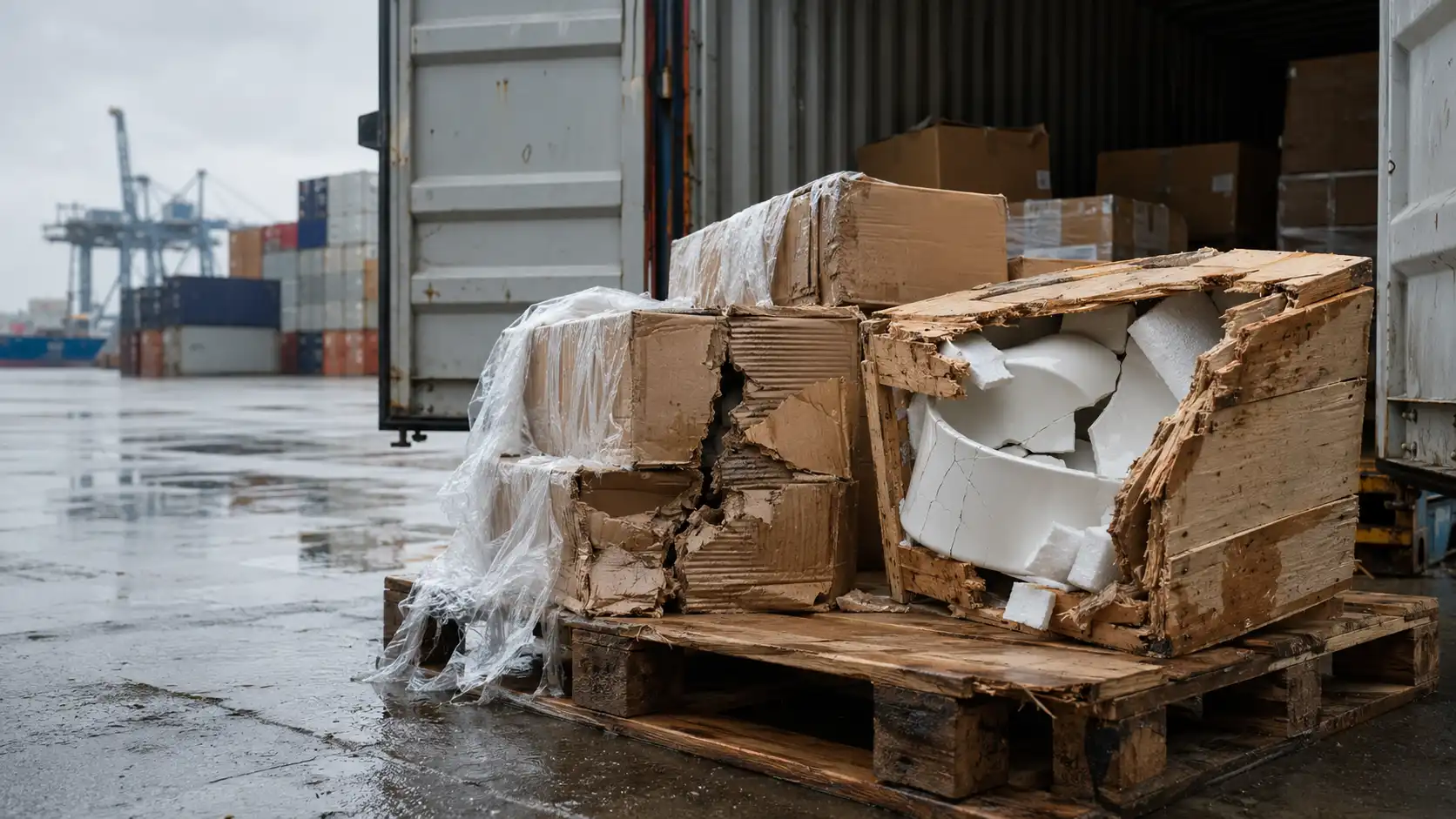
Establishing liability in Kenya’s maritime and logistics chain
Imagine this…
At 9:15 a.m. on a Monday morning, the operations manager of a Nairobi based pharmaceutical distributor received a call from the company's clearing agent at the Port of Mombasa indicating that the container had arrived!
According to the shipping documents, everything was in order. The bill of lading described the cargo as being in good condition when it was loaded. The container had been discharged at Mombasa, moved through the port and subsequently released to a Container Freight Station (CFS) before being loaded onto a truck bound for Nairobi. There was no reason for alarm right until the container doors were opened.
Several cartons were soaked. Others had collapsed under the weight of the water. Pharmaceutical packaging was stained and damaged and some of the products were no longer fit for sale. The loss was eventually estimated at several million shillings.
The importer immediately wanted to know one thing: Who was responsible? The shipping line said the container had been handed over to the port in good order. The port records showed that the container had subsequently been released to the CFS. The CFS maintained that it had received the container without any apparent damage and released it to the appointed transporter. The transporter insisted that the container had been collected in good condition and delivered to Nairobi as received. Everyone had an explanation! No one accepted responsibility.
The problem was that the cargo had passed through several hands between the moment it was loaded onto the vessel and the moment the container was opened in Nairobi. By the time the damage was discovered, the crucial question was no longer simply what was damaged? It was where did the damage occur, while the cargo was in whose custody, and can that point be proved? That is why cargo damage claims become considerably more complicated than they first appear.
For an importer, exporter, insurer or logistics operator, establishing that cargo arrived damaged is only the beginning. The real challenge is identifying the responsible party, preserving the evidence necessary to prove the claim, complying with applicable contractual and statutory notice requirements and commencing proceedings before the relevant limitation period expires.
In Kenya, those questions become particularly important where cargo moves through the Port of Mombasa and passes between multiple custodians before reaching its final destination.
What is a cargo damage claim?
A cargo damage claim arises where goods are physically damaged while being carried, handled, stored or transported. The damage may occur during the ocean voyage, during loading or discharge, while the goods are in the custody of the port operator, at a CFS or warehouse or during inland transportation.
The nature of the damage will vary considerably depending on the cargo. Machinery may be damaged through impact or improper handling. Agricultural produce may deteriorate because of inadequate temperature control, electronics may be rendered unusable through exposure to moisture, chemicals may leak or become contaminated and motor vehicles may suffer physical damage during loading, discharge or transportation.
Cargo damage should also be distinguished from other forms of cargo claims. A claim for physical damage is different from a claim for complete loss, short delivery, misdelivery or delay. The distinction matters because the contractual provisions, statutory obligations, evidential requirements and applicable time limits may differ depending on the nature of the claim.
The starting point in any cargo damage dispute should be the same which is: identifying what happened to the cargo between the point at which it was received in good condition and the point at which the damage was discovered?
Why the chain of custody matters
Cargo moving through the Port of Mombasa may pass through several custodians before reaching its final destination. A typical journey may involve the ocean carrier, the Kenya Ports Authority (KPA), a CFS or another warehouse operator and an inland transporter. Clearing and forwarding agents may also be involved in arranging documentation and movement of the cargo. This creates an evidential problem.
By the time damage is discovered, the goods may have passed through several different. Each party may have a different contractual obligation and may be subject to a different statutory regime.
The fact that damage is discovered at the consignee's premises does not therefore establish that the transporter caused the damage. Equally, the fact that the cargo arrived at Mombasa in an apparently sound condition does not automatically establish that the ocean carrier is liable. The critical question is where the damage occurred. This is why documents recording the condition and movement of the cargo at each handover can be central to the claim. Gate-in and gate-out records, interchange documentation, seal records, tally sheets, delivery notes, container inspection reports and survey reports may collectively establish a chronology from which the likely point of damage can be identified.
The legal framework governing cargo damage claims in Kenya
Cargo damage claims in Kenya are governed by several overlapping legal regimes. The applicable law will depend on the stage of transportation at which the damage occurred, the identity of the party being sued and the terms of the relevant contract as discussed below;
Carriage of Goods by Sea Act; Section 2 provides that, subject to the Act, the provisions contained in its Schedule apply to the carriage of goods by sea in ships carrying goods from a port in Kenya to another port, whether in or outside Kenya. The Schedule contains the Hague- Rules. This statutory position was considered by the Court of Appeal in Carl Ronning v Societe Navale Chargeurs Delmas Vieljeux (The Francois Vieljeux) [1984] KECA 20 (KLR), where the Court considered the operation of the Kenyan legislation and the Hague Rules in the context of a cargo claim arising from the loss of a vessel and its cargo.
It is therefore important to distinguish between the Hague Rules incorporated into Kenyan law through the Carriage of Goods by Sea Act and the Hague-Visby Rules, which may apply contractually where they have been incorporated into the bill of lading or otherwise form part of the applicable contractual regime. A practitioner should not simply assume that every cargo claim arising from an international shipment is governed by Hague-Visby. The bill of lading, the applicable law and the contractual terms must be examined first.
-
The Merchant Shipping Act; The Merchant Shipping Act, 2009 provides the broader statutory framework for shipping and maritime activities in Kenya. In a cargo dispute involving an ocean carrier, it should be considered together with the Carriage of Goods by Sea Act and the terms of the contract of carriage.
-
The Kenya Ports Authority Act; Where cargo is in the custody of KPA, the Kenya Ports Authority Act, Cap. 391 assumes particular importance. Section 22 provides that, subject to the Act or any contract, KPA is not liable for loss, misdelivery, detention or damage to goods delivered to or in its custody except where the loss, misdelivery, detention or damage is caused by want of reasonable foresight and care on the part of KPA or its employees.
The provision therefore creates a statutory framework governing KPA's responsibility for goods in its custody and a claimant must consider both the scope of KPA's duty and the statutory exceptions available to the Authority.
-
Carriage of Goods by Road Act, Cap. 404 may become relevant, together with the transport contract and any applicable contractual terms. The road transporter's responsibility must be considered separately from the carrier's responsibility for the ocean leg. A cargo owner should therefore avoid treating the entire journey as a single undifferentiated period of liability.
-
Marine Insurance Act, Cap. 390; where the cargo is insured. An insurer that indemnifies the cargo owner may have rights of subrogation enabling it to pursue recovery from the party responsible for the loss. The insurance policy and claim file should consequently form part of the documents reviewed when investigating the claim.
Who can be liable for damaged cargo?
The identity of the proper defendant depends principally on the stage at which the damage occurred.
-
The ocean carrier; Where the evidence indicates that the damage occurred during the ocean voyage, loading, stowage or discharge, the contractual relationship with the carrier becomes central. The bill of lading should be examined carefully. It may contain a clause paramount incorporating a particular set of cargo liability rules, a jurisdiction clause, an arbitration clause, package or weight limitations and contractual time bars.
The carrier may also rely on statutory or contractual defences depending on the applicable regime. In Carl Ronning, the Court of Appeal considered both the statutory Hague Rules framework and the contractual provisions contained in the bill of lading. The decision is useful not only for understanding the Kenyan carriage of goods by sea regime but also for demonstrating the importance of the contractual terms governing the particular shipment.
-
The Kenya Ports Authority; Where cargo was in KPA's custody, section 22 of the KPA Act becomes central. The claimant will generally need to establish that the loss or damage occurred while the goods were in KPA's custody and that the statutory basis for liability has been satisfied. The interaction between section 22 and section 62 was considered by the Court of Appeal in Kenya Ports Authority v Threeways Shipping Services (K) Limited [2019] KECA 472 (KLR).
In that case, four containers arrived at the Port of Mombasa and were placed in KPA's custody. When the clearing agent subsequently sought to collect them, the containers were missing. The claim was founded on negligence in the storage, management, handling, warehousing and release of the containers. KPA argued that section 62 of the KPA Act deprived the High Court of jurisdiction and required the dispute to proceed through arbitration. The Court of Appeal rejected the proposition that section 62 provided an absolute bar to court proceedings. It considered the relationship between sections 22 and 62 and held that the negligence exception in section 62 meant that the High Court retained jurisdiction over the claim founded on negligence and want of reasonable care.
The significance of Threeways Shipping extends beyond the facts of the missing containers. It demonstrates that the way a claim is pleaded and the legal basis on which liability is asserted can have consequences for jurisdiction.
-
CFS operators and warehousemen; A CFS operator may assume responsibility for the cargo after it leaves the port's custody. The relevant terms of the CFS agreement, delivery documentation and records of receipt and release should therefore be examined.
Where cargo is received in a sealed container, the condition of the seal and the condition of the container may become particularly important. A CFS operator may argue that it received the cargo in a sealed container and did not open it before release. Conversely, evidence of a broken seal, physical damage to the container or unexplained movement may raise questions about what occurred while the cargo was within its custody.
-
Clearing and forwarding agents; A clearing and forwarding agent should not automatically be treated as liable merely because it handled the documentation or arranged movement of the cargo. The contractual role of the agent must be identified. In some circumstances the agent may have assumed responsibility for particular aspects of handling or delivery. In others, it may have acted merely as an intermediary on behalf of the cargo owner.
-
Inland transporters; Once the cargo is handed over for inland transportation, the road transporter may assume responsibility under the transport contract and applicable law. The claimant should establish the condition of the cargo when the transporter received it, the condition on delivery and any evidence of mishandling during transportation. The transporter may, depending on the circumstances, raise issues concerning defective packaging, pre-existing damage or other contractual or statutory defences.
Proving a cargo damage claim
The central evidential challenge is usually establishing causation. A claimant will ordinarily need to establish the condition of the goods before the relevant defendant assumed custody, demonstrate the condition in which the goods were delivered or discovered and provide evidence connecting the damage to the defendant's period of responsibility.
A clean bill of lading can be important evidence that the cargo was received by the carrier in apparent good order and condition. It is not, however, necessarily conclusive evidence that every aspect of the cargo was free from internal or latent defects. Similarly, a clean delivery note may create evidential difficulties for a claimant where visible damage existed at the time of delivery but was not recorded.
The circumstances surrounding the particular cargo must therefore be examined. The condition of the packaging, container, seals and cargo may all be relevant. For example, in a machinery claim, for example, an expert may need to determine whether the damage is consistent with impact, improper lifting, vibration or water exposure, whereas , in a refrigerated cargo claim, temperature records may be more important than the physical condition of the container and in a moisture damage claim, the investigation may need to consider the integrity of the container, packing materials, ventilation, desiccants and the location and nature of the corrosion. It is important that the legal claim should be built around the evidence rather than the other way around.
The importance of a survey
A cargo survey should ordinarily be arranged as soon as possible after damage is discovered.
Where appropriate, the potentially responsible parties should be invited to participate in a joint survey. This gives each party an opportunity to inspect the cargo and record its position while the physical evidence remains available.
A useful survey should address not only the extent of the damage but also its probable cause. It should consider the condition of the container and packaging, the integrity of seals, signs of impact or water ingress, the condition of the goods and the likely mechanism by which the damage occurred.
The survey should also preserve photographs and other supporting material. A claimant who repairs, repacks, disposes of or moves the damaged goods before the relevant parties have had a reasonable opportunity to inspect them may create unnecessary evidential difficulties.
KPA claims: notice and limitation
Claims against KPA require particular attention because the KPA Act contains specific notice and time requirements. Section 65 deals with claims concerning goods in the custody of the Authority. The statutory requirements differ depending on whether the claim concerns non-delivery of an entire consignment or separate package or damage, misdelivery or missing goods forming part of a consignment.
In relation to damage, misdelivery or missing goods within a consignment, section 65(2) requires written notification of the relevant fact within four days of delivery and a written claim containing the necessary particulars within one month of delivery. This is an important practical requirement. A cargo owner should not wait for the final valuation or survey report before taking advice on whether statutory notification must be made.
The Act contains provisions dealing with circumstances in which compliance was impracticable, but a claimant should not rely on an eventual application for relief where compliance was reasonably possible. Section 66 creates a further requirement before proceedings are commenced against KPA in respect of acts done in pursuance or execution or intended execution, of the Act or a public duty. The claimant must serve written notice containing particulars of the claim and intention to commence proceedings at least one month before instituting the action. The proceedings must also be commenced within 12 months after the act complained of or, in the case of continuing injury or damage, within six months after cessation of the injury or damage.
The Court of Appeal's decision in Kenya Ports Authority v Cyrus Maina Njoroge [2018] KECA 394 (KLR) demonstrates the strict approach that may be taken to section 66. Although the underlying dispute concerned an employment claim rather than cargo damage, the Court held that a claim brought outside the statutory period was time barred and that the court lacked jurisdiction to entertain it. The Court emphasised that where a statutory limitation provision applies, the expiry of the prescribed period can bring the proceedings to an end. For cargo claims, the practical point is clear: section 65 and section 66 should be treated as separate requirements and noted separately.
The one-year maritime time bar
Claims arising from carriage by sea may also be subject to a one-year time bar. Article III rule 6 of the Hague Rules provides for a one-year period for bringing an action in respect of loss or damage arising from the carriage of goods. Bills of lading incorporating the Hague-Visby Rules may similarly contain a one-year limitation period. The issue remains practically significant in Kenya.
In Fresco Freshpro Limited v Mediterranean Shipping Company SA & another [2025] KEHC 11359 (KLR), a preliminary objection was raised before the High Court in Mombasa on the basis that the plaintiff's claim was time barred under section 2 of the Carriage of Goods by Sea Act read together with Article III rule 6 of the Hague-Visby Rules. The Court ultimately dismissed the preliminary objection because the plaintiff had obtained leave to institute the suit out of time and the defendants had not challenged that order through the appropriate procedure. The case nevertheless illustrates an important practical point: time limitation in maritime claims can determine the litigation before the substantive question of liability is ever tried.
A cargo owner should therefore obtain the bill of lading and identify all applicable limitation provisions immediately after discovering damage.
What documents should be preserved?
A cargo damage investigation should begin with the documents that establish the movement and condition of the goods. The bill of lading or sea waybill should be obtained together with the commercial invoice, packing list, delivery order, release documentation and any available pre-shipment inspection documents.
The claimant should also obtain records showing the physical movement of the container, including gate-in and gate-out records, interchange reports, tally sheets, seal records and CFS records. Where available, CCTV footage can be particularly valuable in establishing how the container was handled. Photographs and video should be taken as soon as the damage is discovered. The photographs should capture not only the damaged goods but also the container, seals, packaging and any visible signs of impact, water ingress or mishandling.
Where the goods are insured, the insurance policy, claim file and loss adjuster's report should also be preserved. The importance of this documentary trail cannot be overstated. In many cargo disputes, the decisive issue is not whether the goods were damaged but whether the claimant can demonstrate when the damage most probably occurred.
Common defences
A carrier, warehouseman, CFS operator or transporter may raise several defences depending on the circumstances. One common defence is that the goods were already damaged before the defendant received them. This makes evidence of the condition of the cargo at the beginning of the relevant custody period particularly important.
Additionally, the inherent vice or natural deterioration of the goods. A defendant may contend that the nature of the goods themselves caused or contributed to the loss. Improper or inadequate packing may also be relied upon. This is particularly relevant where machinery, fragile equipment, chemicals or other sensitive cargo was not appropriately secured for transportation.
Lastly, the carrier may also rely on statutory or contractual exceptions applicable to the relevant carriage regime which are exclusion or limitation clauses contained in the bill of lading, transport contract, warehouse terms or other contractual documents.
The effectiveness of such clauses will depend upon their wording, the applicable statutory regime and the circumstances of the claim. A claimant should therefore examine the actual clause rather than assume that a general statement such as "goods carried at owner's risk" automatically determines the dispute.
Quantifying the loss
Once liability has been established, the claimant must prove the amount recoverable. The appropriate measure will depend on the nature of the damage. In some cases, reasonable repair costs may provide the appropriate measure whereas in others, the relevant loss may be the difference between the value of the goods in sound condition and their value in the damaged condition. Where the goods are beyond economic repair, replacement value may become relevant, subject to the applicable legal principles and any contractual or statutory limitation.
The claimant should support the quantum with invoices, repair quotations, survey evidence, valuation reports and other reliable documentation. Claims for consequential losses require particular care. Losses such as lost, resale opportunities or business interruption are not automatically recoverable merely because they resulted commercially from the damaged cargo. The claimant must establish the legal basis for the particular loss and provide adequate evidence.
Package limitation and contractual limitations
Maritime cargo claims may also be subject to contractual or statutory limits on liability. Where the Hague-Visby Rules are applicable, the package or unit limitation may become relevant.
However, practitioners should be cautious about simply applying the familiar figure of 666.67 SDR per package or 2 SDR per kilogram to every cargo claim arising in Kenya. The applicable limitation depends on the legal regime governing the particular carriage and the terms of the contract. This is another reason why the bill of lading should be reviewed at the beginning of the dispute rather than after the claimant has already calculated the value of the claim.
What should a cargo owner do when damage is discovered?
The response to cargo damage should be immediate. The consignee should document the condition of the cargo, record any visible damage on delivery documentation and notify the relevant carrier, port operator, CFS, transporter and insurer as appropriate. A survey should be arranged promptly, preferably with the potentially responsible parties invited to participate.
The cargo and container should also be preserved wherever reasonably possible. Repairs, disposal, repacking or movement of the goods may destroy evidence that could later be important in establishing causation. At the same time, the relevant contractual documents should be obtained and reviewed. The bill of lading, sea waybill, transport contract, warehouse or CFS terms and delivery documentation may contain provisions affecting liability, jurisdiction, arbitration, limitation and notice.
Most importantly, the claimant should identify all applicable deadlines immediately. The relevant date for a contractual one-year time bar may differ from the date relevant to a KPA statutory notice or limitation provision. These deadlines should therefore be recorded separately rather than treated as one general limitation period.
Conclusion
Cargo damage claims are ultimately about more than damaged goods. They are about custody, causation, contractual responsibility, evidence and time.
A container may pass through several hands between the vessel and the consignee. Each handover creates a potential evidential point. The condition of the cargo, the condition of the container, the integrity of the seal, the movement records and the circumstances in which the damage was discovered can collectively determine whether a claim succeeds.
For businesses using the Port of Mombasa, the practical lesson is to act before the evidence disappears. A damaged consignment should be inspected promptly, the relevant parties notified, the evidence preserved and the applicable contractual and statutory time limits identified before any substantive claim is pursued.
The question should not simply be whether the cargo arrived damaged. The more important questions are where the damage occurred, who had responsibility for the cargo at that time and whether the claim has been brought within the applicable legal and contractual framework.
How CM Advocates LLP can assist
At CM Advocates LLP, our Blue Economy & Maritime Law Practice Unit working alongside our Dispute Resolution & Appellate Practice Unit advises cargo owners, insurers, shipping and logistics companies, transporters and other participants in the maritime and logistics sector on cargo damage and related disputes.
Our work includes advising on bills of lading and carriage contracts, identifying the parties responsible for cargo at different stages of transit, assessing statutory and contractual liability, advising on notice and limitation requirements, coordinating with surveyors and loss adjusters, pursuing recovery and subrogated claims, negotiating settlements and representing clients in litigation and arbitration.
For businesses moving cargo through the Port of Mombasa and across East Africa, early legal advice can help preserve evidence, identify the correct defendant and protect the right to recover before a procedural or contractual time bar becomes an obstacle.
This publication is intended for general information purposes only and does not constitute legal advice or a legal opinion. It is not intended to be a substitute for legal advice on any specific matter. The application of the law will depend on the particular facts and circumstances of each case. If you require advice your specific circumstances, please contact Kelvin Mwaniki, Senior Associate (kmwaniki@cmadvocates.com) and Fiona Ikou (fikou@cmadvocates.com) or your usual contact at our firm.
|
Contributors |
|
|
Kelvin Mwaniki Senior Associate kmwaniki@cmadvocates.com |
Fiona Ikou Legal Assistant fikou@cmadvocates.com |
Contact our Practice Units
Marine & Blue Economy Practice Group
E: blueeconomy@cmadvocates.com
Dispute Resolution & Appellate Practice Group
E: disputeresolution@cmadvocates.com