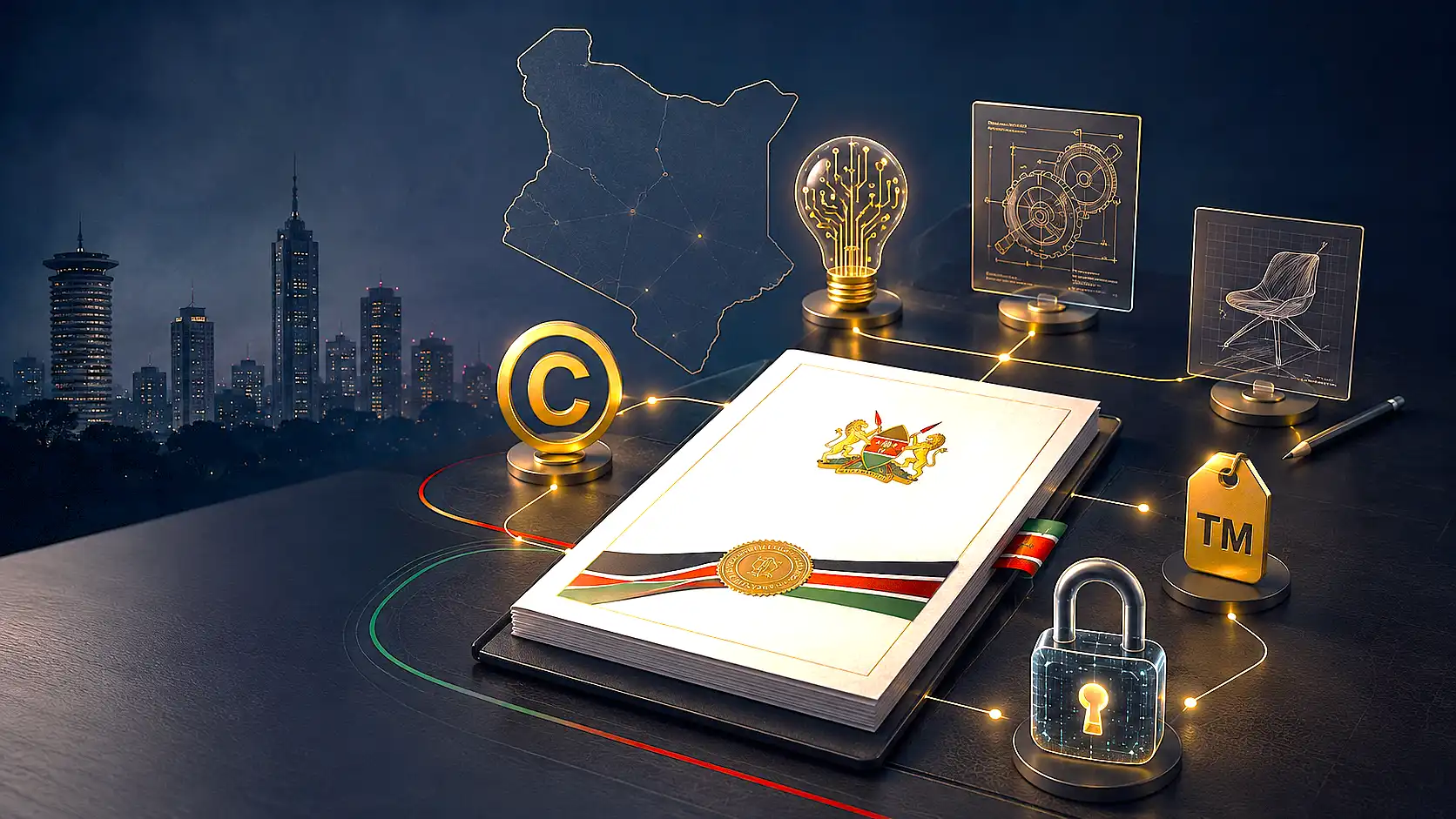
The Intellectual Property Bill, 2026 (the “Bill”) proposes a restructuring of Kenya’s intellectual property framework. Its most notable reform is the establishment of the Kenya Intellectual Property Authority (“KIPA”), bringing together functions currently undertaken by the Kenya Industrial Property Institute (“KIPI”), the Kenya Copyright Board (“KECOBO”) and the Anti-Counterfeit Authority (“ACA”).
The Bill therefore seeks to create a more integrated framework for the administration, enforcement and commercialisation of intellectual property rights, while addressing emerging issues such as artificial intelligence (“AI”).
-
A centralized intellectual property administration
The proposed establishment of KIPA is intended to address the fragmentation of intellectual property administration. Currently, patents, utility models, trademarks industrial designs, copyright and anti-counterfeiting are administered through separate institutions. Centralization would improve coordination and provide rights holders with a more coherent administrative framework.
-
A single Intellectual Property Tribunal
The Bill establishes the Intellectual Property Tribunal to hear and determine all intellectual property disputes and appeals in Kenya. The Tribunal replaces the separate tribunals currently operating under the Industrial Property Act (Cap. 509), the Trademarks Act (Cap.506) and the Copyright Act (Cap. 130). A single tribunal will ensure consistency in the resolution of disputes and reduce delay.
The effectiveness of the Tribunal will depend on clear jurisdictional boundaries between KIPA, the Tribunal and the courts, particularly in relation to appeals and matters pending when the new framework comes into force.
-
AI and inventorship
The Bill distinguishes between AI-assisted inventions, where a natural person makes a meaningful inventive contribution and AI-generated inventions, where AI autonomously generates the inventive concept without direct human involvement.
Further, the Bill permits patent protection for AI-assisted inventions where the human inventor provides the essential inventive contribution but excludes AI-generated inventions from patent protection. It also excludes AI algorithms and software per se that lack technical character.
-
Enforcement and counterfeit goods
The Bill proposes to transfer the Anti-Counterfeit Authority’s functions to KIPA and strengthen the recordal of IP rights in respect of goods imported into or manufactured in Kenya. The proposed framework would facilitate earlier identification and detention of suspected counterfeit goods at the border.
-
Copyright, genetic resources and traditional knowledge
The Bill also contains provisions concerning copyright and related rights, genetic resources, traditional knowledge and cultural expressions. These provisions seek to strengthen the protection and administration of these rights within the proposed IP framework.
This is particularly relevant to creators, research institutions and communities whose traditional knowledge, cultural expressions or associated genetic resources may be subject to commercial use.
-
The transition to a unitary system
The Bill provides for the transfer of the functions, assets, liabilities, records and ongoing matters of KIPI, KECOBO and the ACA to KIPA. Existing registrations, applications, licences, assignments, recordals and pending proceedings will therefore need to transition to the new framework.
The transitional provisions will determine how existing rights and proceedings are treated following the establishment of KIPA and should provide clarity on continuity, applicable procedures and the transfer of records.
Implications for intellectual property rights’ holders in Kenya
The proposed reforms warrant a review of existing IP portfolios, particularly where rights, applications or proceedings will transition to KIPA. Rights holders should ensure that ownership, assignments, licences and recordals are in order and that pending matters are properly documented ahead of the transition.
Brand owners should also assess their current anti-counterfeiting and border-enforcement measures in light of the proposed recordal framework. Technology companies and research institutions using AI in research and development should, in particular, maintain clear records of human contribution to inventions and address ownership expressly in their contractual arrangements.
These measures will place rights holders in a stronger position to navigate the transition and protect their interests under the proposed framework.
Conclusion
The Bill represents an attempt to make Kenya’s intellectual property administration more coherent. The proposed reforms will be particularly relevant to businesses with existing intellectual property portfolios, technology-driven enterprises and brand owners, given the proposed changes to the administration of existing rights, AI-related inventions and anti-counterfeiting enforcement. Early assessment of these implications will enable rights holders to identify any gaps and position their intellectual property portfolios appropriately as the new framework develops.
The Bill remains subject to the legislative process and may be amended before enactment.
For further information on the Intellectual Property Bill, 2026 or advice on any intellectual property matter, please contact the contributor or our Intellectual Property, Brands and Commercialisation team at ipbc@cmadvocates.com.
CM ADVOCATES LLP
Head Office – Nairobi
I&M Bank House, 7th Floor
2nd Ngong Avenue
Nairobi, Kenya
E: law@cmadvocates.com
Mombasa Office
Links Plaza, 3rd Floor
Links Road, Nyali
Mombasa, Kenya
E: mombasaoffice@cmadvocates.com
Regional Presence
Uganda | Tanzania | Rwanda | Zambia | Ethiopia | South Sudan
One Firm. Purpose-Led. Client-Focused. Future-Ready.
Disclaimer: This publication is for informational purposes only and does not constitute legal advice. For tailored legal support, please consult our team.