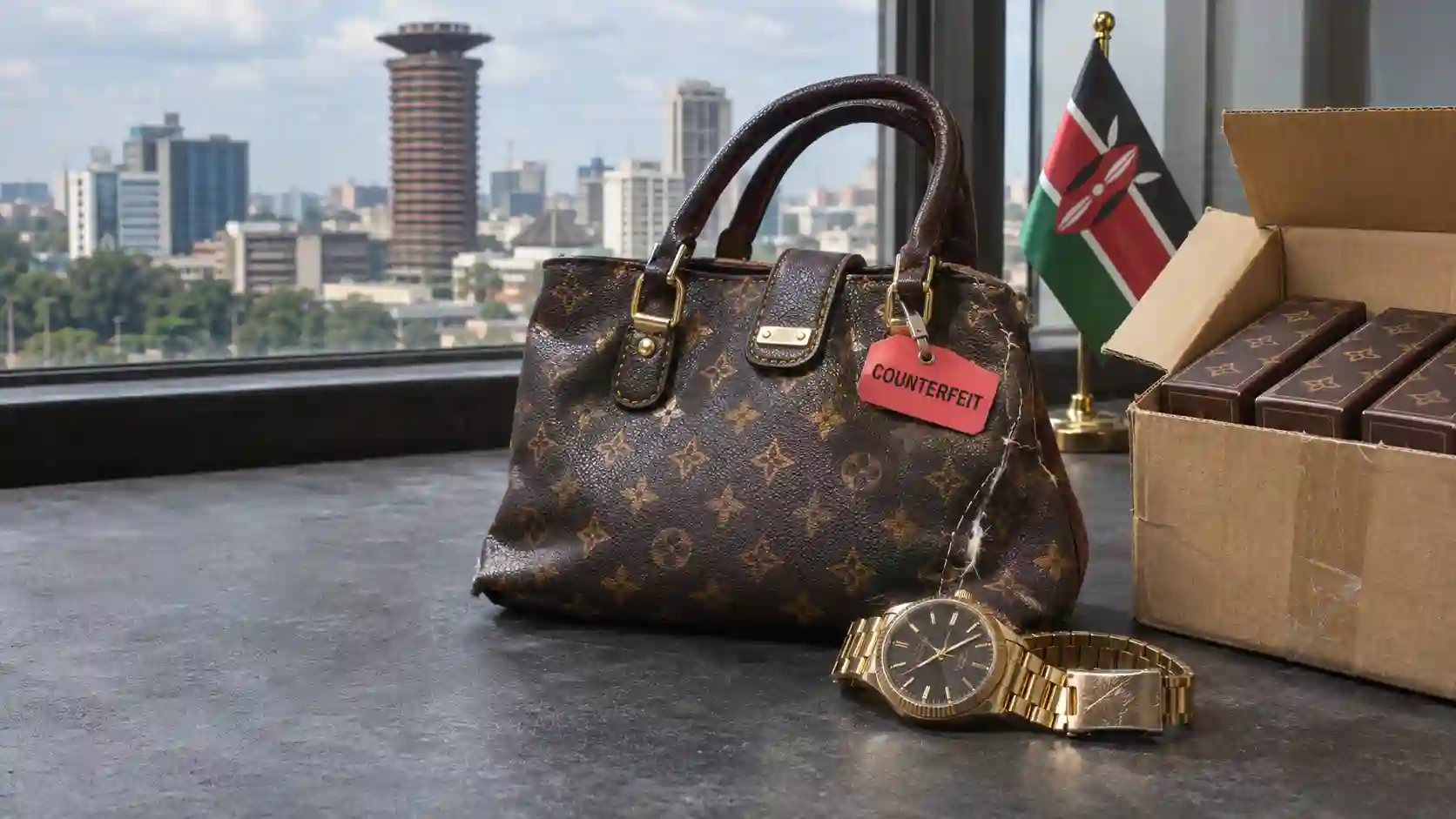
The Anti-Counterfeit Authority’s (ACA) seizure of suspected counterfeit luxury bags bearing the trademarks of Gucci, Dior, Chanel and Louis Vuitton during an intelligence-led enforcement operation in Nairobi on 26th October 2026 highlights the challenges facing luxury brands in protecting their intellectual property rights. The operation reflects a wider concern within the luxury goods industry, where established brands are targets for counterfeiters seeking to capitalize on their reputation, exclusivity and consumer recognition without making the corresponding investment in design, craftsmanship, quality control and brand development.
The implications extend beyond the sale of imitation products. Counterfeiting undermines brand value, erodes consumer confidence, distorts competition and compromises the commercial interests of businesses that have invested in maintaining their brands. It also raises questions on the responsibilities of businesses involved in the distribution of branded goods and the effectiveness of enforcement mechanisms in addressing the trade in counterfeit luxury products.
The intellectual property behind luxury brands
A luxury product may embody several forms of intellectual property, each protecting a different aspect of its commercial identity. Consider a Louis Vuitton handbag: the brand name and LV monogram identify its commercial origin, its distinctive shape and configuration contribute to its visual appeal, while its decorative patterns incorporate original artistic works. The intellectual property framework in Kenya provides separate but complementary protection for these elements.
-
Trademark protection
The most recognisable feature of a luxury product is its brand name or logo. In the case of Louis Vuitton, the name and LV monogram distinguish its products and enable consumers to associate them with the fashion house.
The Trademarks Act (Cap. 506) provides for the registration and protection of trademarks. Under sections 7 and 8, registration confers exclusive rights to use a trademark in relation to the goods or services for which it is registered. Unauthorised use of an identical or similar mark in the course of trade constitutes infringement.
The protection of well-known trademarks under section 15A of the Trademarks Act is particularly relevant to international luxury brands. The provision allows the proprietor of a trademark recognised as well-known in Kenya to restrain the use of an identical or similar mark in relation to identical or similar goods or services where such use is likely to cause consumer confusion.
-
Industrial design protection
Beyond its branding, a luxury product may also be distinguished by its shape, configuration and ornamental features. For instance, the visual appearance of a Louis Vuitton handbag contributes to its commercial appeal, independently of the name or monogram displayed on it.
The Industrial Property Act (Cap. 509) provides for the protection of such features through industrial design registration. Section 84 defines an industrial design by reference to a composition of lines or colours or a three-dimensional form which gives a special appearance to a product of industry or handicraft. For luxury fashion houses, this protection applies to shapes, configurations and ornamental features. Unlike trademarks which identify commercial origin, industrial designs protect the visual features of the product itself.
-
Copyright protection
A luxury product may also incorporate original artistic works, including decorative prints, illustrations, patterns and graphic elements. In the case of Louis Vuitton, original artistic patterns incorporated into its products qualify for copyright protection. The Copyright Act (Cap.130) protects original artistic works and gives copyright owners exclusive rights over specified acts of reproduction, distribution and other forms of exploitation. Unauthorised reproduction of artistic works incorporated into a product gives rise to a copyright infringement claim.
Protection against counterfeiting under the Anti-Counterfeit Act
The Anti-Counterfeit Act, 2008 provides brand owners with a mechanism to act against counterfeit goods in Kenya. Under section 33, the owner of an intellectual property right, its licensee or agent may lodge a complaint with the ACA where there are reasonable grounds to suspect that an offence under the Act has been committed.
A complaint should identify the affected intellectual property rights, the suspected counterfeit goods and the basis for suspecting infringement. Brand owners should therefore maintain current registration records, product specifications and other materials that enable the ACA to verify their rights and distinguish genuine products from counterfeits.
Under section 23, ACA inspectors may enter and search premises or vehicles suspected of containing counterfeit goods and seize the goods. Brand owners can assist the investigation by examining the products and providing evidence of their counterfeit nature. However, a seizure is not a final determination that the goods are counterfeit.
The Act also provides for action against counterfeit goods at the point of importation under section 34. This is particularly relevant to luxury brands whose products are vulnerable to unauthorised imports and distribution through local retail channels.
Persons convicted of dealing in counterfeit goods face the penalties prescribed under section 35, including fines and imprisonment. For brand owners, the practical priority is to identify suspected counterfeit products, document the relevant rights and engage the ACA to facilitate investigation and enforcement.
Recordation of intellectual property rights involving luxury goods
International luxury brands importing goods into Kenya must comply with the mandatory intellectual property rights recordation requirement under Section 34B of the Anti-Counterfeit Act, 2008 and the Anti-Counterfeit (Recordation) Regulations, 2021.
Recordation is separate from the baseline registration of intellectual property rights with the Kenya Industrial Property Institute (KIPI) or Kenya Copyright Board (KECOBO); it does not create or confer new ownership or exclusive rights. Instead, it serves as a compulsory operational enforcement tool. Approved recordations are valid for one year and must be renewed annually. Luxury brands, alongside their local subsidiaries, official distributors and authorized importers, must ensure their details remain current at the ACA to prevent cargo seizures, port delays or legal penalties.
Considerations for luxury brand owners operating in Kenya
The recent ACA operation provides a reminder that intellectual property protection requires an active approach, particularly for international brands whose products are distributed across multiple jurisdictions. Luxury brand owners should consider the following measures:
-
Review trademark portfolios: Ensure that core brand names, logos, monograms and other distinctive identifiers are appropriately protected in Kenya. The scope of registration should reflect the goods being marketed, including handbags, clothing, footwear, jewellery and other relevant accessories.
-
Protect distinctive product designs: Identify commercially significant product shapes, configurations and ornamental features that may qualify for industrial design protection.
-
Assess ACA recordation requirements: Confirm that the intellectual property rights relating to goods imported into Kenya have been recorded with the ACA and that recordations remain current.
-
Monitor physical and online marketplaces: Establish mechanisms for identifying suspected counterfeit products, including monitoring online marketplaces, social media platforms and physical retail outlets. Evidence of suspected infringement should be preserved to support potential enforcement action.
-
Develop an enforcement strategy: Establish procedures for responding to suspected counterfeiting, including engagement with the ACA, customs authorities and other relevant enforcement agencies. A coordinated approach is necessary where suspected counterfeit products originate outside Kenya or move through multiple jurisdictions.
Conclusion
The ACA’s operation in Nairobi highlights the importance of effective intellectual property protection in markets where internationally recognised brands are present. For luxury brands, maintaining brand value requires attention not only to the protection of their intellectual property but also to the legal and regulatory frameworks governing the movement and distribution of their products.
Kenya provides a range of legal and enforcement mechanisms through which rights holders can address counterfeiting and protect their commercial interests. A coordinated approach to intellectual property protection, import compliance and enforcement helps luxury brands preserve the integrity of their products, maintain consumer confidence and safeguard the value associated with their brands.
How CM Advocates LLP Can Assist
CM Advocates LLP advises businesses on intellectual-property protection, regulatory obligations and disputes arising from falsified or non-compliant products. We assist clients in assessing their legal exposure, protecting their commercial interests and responding to suspected counterfeiting and product-related disputes. Our Intellectual Property, Brands and Commercialisation Unit assists with:
-
Trademark, copyright and industrial design registration and portfolio management;
-
Intellectual property rights recordation with the ACA;
-
Anti-counterfeiting strategies, including complaints to the ACA and coordination of enforcement action;
-
Legal reviews of importation, licensing, distribution and brand protection arrangements;
-
Drafting and review of commercial agreements, including authorised distribution, manufacturing and licensing agreements; and
-
Intellectual property enforcement, infringement proceedings and related commercial disputes.
For enquiries, please contact the contributor below or reach out to our Intellectual Property, Brands and Commercialisation team at ipbc@cmadvocates.com.
Contributor
Mercy Chore, Associate
mchore@cmadvocates.com
CM ADVOCATES LLP
Head Office – Nairobi
I&M Bank House, 7th Floor
2nd Ngong Avenue
Nairobi.
Mombasa Office
Links Plaza, 3rd Floor
Links Road, Nyali
Mombasa.
E: mombasaoffice@cmadvocates.com
Regional Presence
Uganda | Tanzania | Rwanda | Zambia | Ethiopia | South Sudan
Disclaimer: This publication is for informational purposes only and does not constitute legal advice. For tailored legal support, please consult our team.