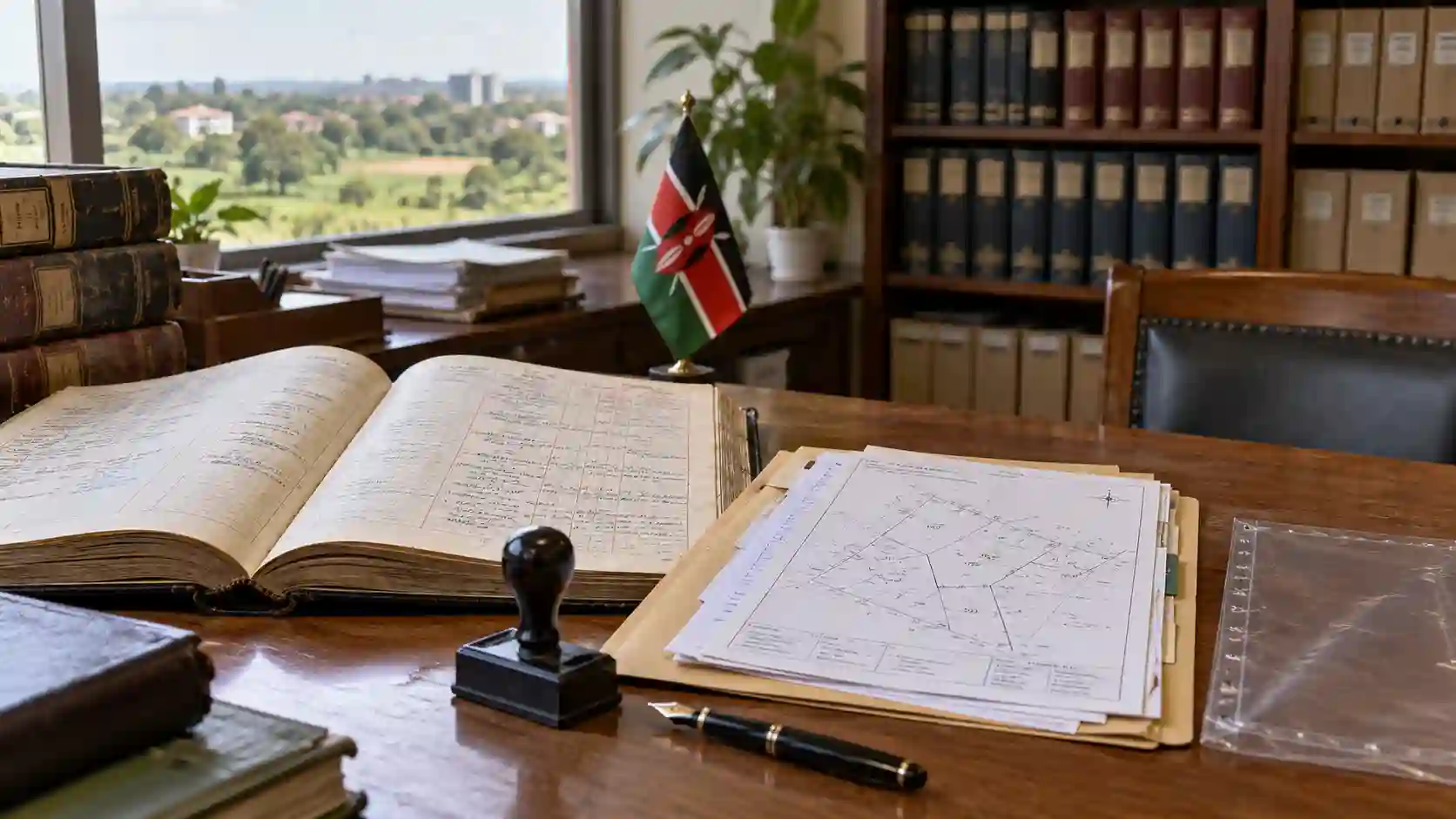
Understanding Section 31(1) of the Land Registration Act (LRA)
Once in awhile, going through the Kenya Gazette you will come across notices under the LRA with the following terms “...I intend to dispense with the production of the said land title deed and proceed with registration of the said instrument...”. These terms are a reflection of the power vested in Land Registrars in certain circumstances to dispense with the production of the original title. In this article, we take a look at the scope of this power and how it is exercised.
Statutory underpinning on the production of title
The production of the original certificate of title or certificate of lease (the title) is ordinarily a precondition for the registration of any dealings in land. Section 31(1) of the LRA, sets out as follows:
“31. Production of certificate
-
If a certificate of title or a certificate of lease has been issued, then, unless it is filed in the registry or the Registrar dispenses with its production, it shall be produced on the registration of any dealing with the land or lease to which it relates, and, if the certificate of title or the certificate of lease shows all subsisting entries in the register, a note of the registration shall be made on the certificate of title or the certificate of lease.”
This provision makes the production of title the default position while simultaneously granting discretion to the Registrar to proceed with registration where title documents are not produced. Additionally, regulation 22(1) of the Land Registration (General) Regulations requires the production of original title documents unless otherwise directed by the Registrar. The production of original title protects the integrity of the land register by ensuring that the person purporting to deal with the land is indeed in possession of, and therefore presumptively entitled to the instrument of ownership.
Similarly, Section 32 of the LRA on the disposition of leases and charges captures in an almost identical manner as section 31(1) as follows:
“32. Dispositions of leases and charges
On the registration of any disposition of a lease or charge, the original and the duplicate of the lease or charge shall, unless the Registrar is satisfied that they cannot be produced, be produced to the Registrar, who shall note particulars of the disposition on the lease or charge and on the duplicate.”
How does the Registrar exercise the power to dispense with production of title?
The power to dispense with production of title is discretionary and should be exercised judiciously especially where valid grounds to do so exist. Courts have had the opportunity to address the exercise of this power and have on occasion noted that a court order dispensing with the production of title documents is not a prerequisite for the Registrars to exercise of this power.
In particular, the court in Re Estate of Philip Kiogo Tunga (Deceased) KEHC 10303 (KLR) addressing section 31 of the LRA had the following to say:
“28. The import of the above provision is that the Land Registrar has power to dispense with the production of the original title. There is no requirement that exercise of the power is dependent upon a Court order to do so.
29. I will couple the power in section 31 with the power of the Land Registrar under section 14 of the Land Registration Act to require any person to produce any instrument certificate or other document or plan relating the land , lease or charge in question, and that person shall produce the same; summon any person to appear and give any information or explanation in respect to land, a lease, charge, instrument, certificate, document or plan relating to the land, lease or charge in question, and that person shall appear and give the information or explanation.
30. Land Registrars should exercise the discretion and power given to them by statute. Failure thereto may become a subject of mandamus proceedings- something I think is not desirable to be in the file of a public officer.”
The procedure then for a person who wants the Registrar to exercise this discretion, is to first request the Registrar in writing and set out cogent reasons why they should not be required to produce the original title. Where valid reasons are put forth, the Registrar should not unnecessarily withhold their discretion. However, should the Registrar decline, a person so aggrieved may then move court for orders to dispense with production of the title or review the Registrar’s decision. This was the position put forth by the court in Charles Ntiritu M’Ikunyua & 3 others v Stephen Robert Gitonga Njagi [2021] KEELC 2307 (KLR), where the court had the following to say in its decision:
“10. A reading of Section 31 of the Land Registration Act reveals that the Land Registrar is vested with the discretion to dispense with the production of an original title deed. The correct procedure then, where a party desires the exercise of this discretion in its favour, is to request the Land registrar in writing citing reasons for why they ought to be allowed not to produce the original title deed. Only where the registrar refuses to exercise that discretion should the party move to court if aggrieved by the registrar’s decision.”
The request for dispensation must be made to the Registrar first before moving court. Failure to do so may result in the dismissal of the application by court as was the case in Charles Ntiritu M’Ikunyua & 3 others v Stephen Robert Gitonga Njagi.
Registrars are required to exercise caution in the wake of fraudulent transactions. As part of that caution, they cause notices to be published in the Kenya Gazette usually with a thirty (30) day period prior to dispensation with the production of title. This period is not mandated by statute but is rather administrative. The notice captures the details of the person applying, the particulars of the parcel of land, reason for the application and the objection period for any party aggrieved with the dispensation to come forth before the Registrar dispenses with production of title.
Conclusion
The Land Registrars’ power to dispense with production of original title under section 31 (1) LRA is a pragmatic and necessary feature of the land registration system in Kenya. The unavailability of title documents should not permanently paralyse legitimate transactions. Registrars should, in deserving cases, dispense with the production of title such as in circumstances where the person holding the document is unreachable or unwilling to surrender the original title documents, or where the documents are unavailable and the transfer is by court order such as in adverse possession causes or succession, where the title documents are untraceable. Persons seeking an exercise of this discretion need to do it in writing to the Registrar first before approaching court. Failure to do so may result in the application being dismissed. However, where the transfer is pursuant to a court order, a further application to dispense is not necessary, the order of court and the Registrar’s discretion are sufficient to effect the transaction. Moving to court should be a measure of last resort where the Registrar unreasonably declines to exercise their discretion.
How CM Advocates LLP Can Help
At CM Advocates LLP, we assist clients navigate the registration of dealings in land including the dispensation under section 31(1) of the LRA, ensuring a request for dispensation is well founded, well evidenced and pursued in the correct order. Our diverse legal team can assist with:
-
assessing eligibility of the transaction for dispensation to determine whether the case meets the threshold the Registrar is likely to accept;
-
preparing the written request and compiling supporting evidence;
-
following up on the Registrar’s gazette notice process; and
-
pursuing court remedies where necessary.
This publication is intended for general information purposes only and does not constitute legal advice or a legal opinion. It is not intended to be a substitute for legal advice on any specific matter. The application of the law will depend on the particular facts and circumstances of each case. If you require advice specific to your circumstances, please contact us via mombasaoffice@cmadvocates.com or your usual contact at our firm.
Contributor
David Muthukia
Associate
dmuthukia@cmadvocates.com
Practice Unit
Dispute Resolution & Appellate Practice Group
E: disputeresolution@cmadvocates.com
CM Advocates LLP – Contact Details
Head Office – Nairobi
I&M Bank House, 7th Floor
2nd Ngong Avenue
Nairobi, Kenya
E: law@cmadvocates.com
Mombasa Office
Links Plaza, 4th Floor
Links Road, Nyali
Mombasa, Kenya
E: mombasaoffice@cmadvocates.com
Regional Presence
Kenya | Uganda | Tanzania | Rwanda | Zambia | Ethiopia | South Sudan