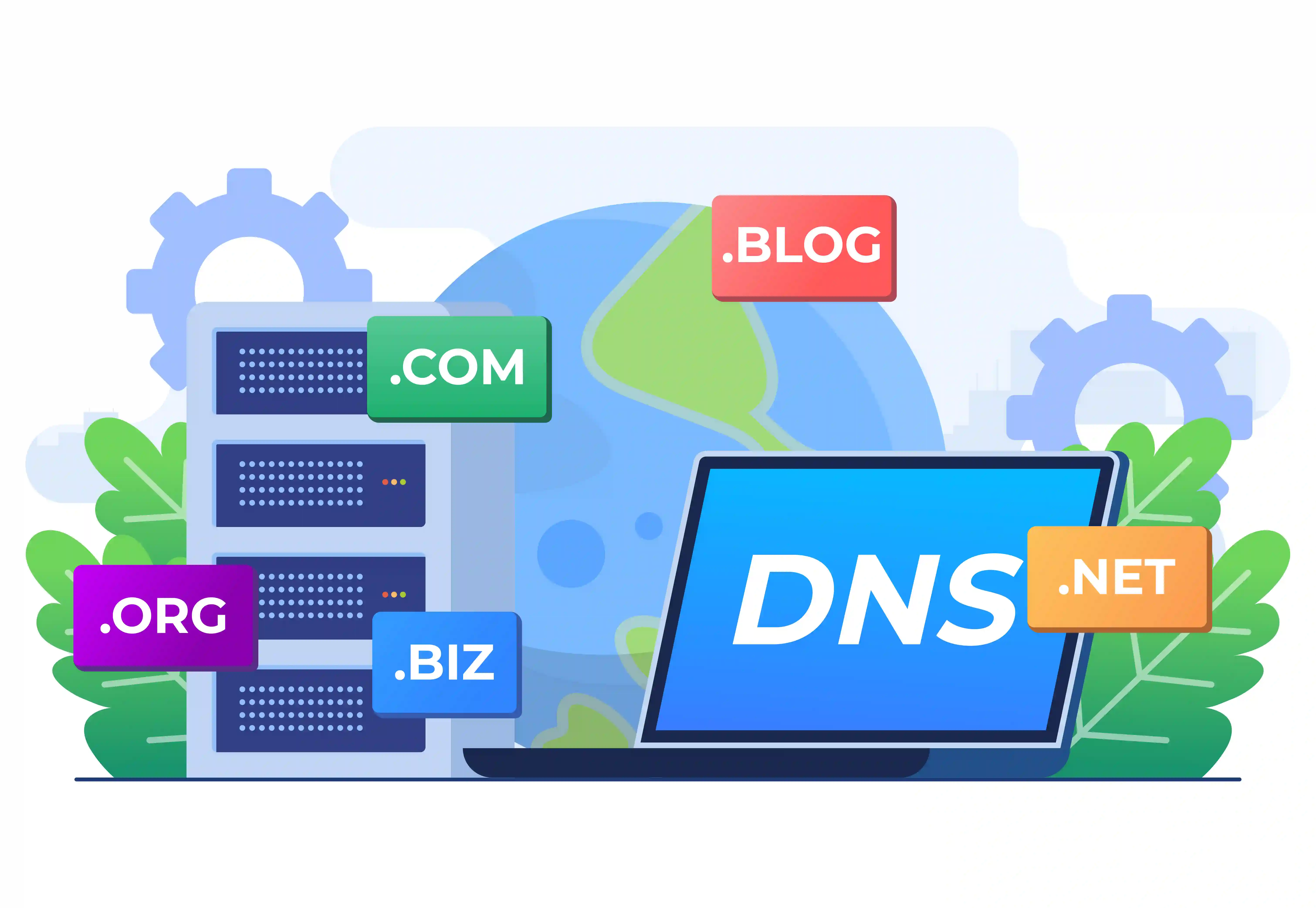
In today’s digital economy, a brand’s online presence is central to its success. Consumers often encounter businesses first online, making the domain name the primary digital identifier for your brand. Registering a domain that aligns with your trademark is both a marketing strategy and a legal necessity, safeguarding your brand from misuse, confusion and cybersquatting. A well-chosen domain not only protects your business but also strengthens customer trust and ensures your brand remains distinct in a competitive online marketplace.
Understanding domain names
A domain name is a humanreadable address used to locate a website on the Internet. It is resolved by the Domain Name System (DNS) into the numeric address of the server that hosts the site. The main types of domain names are:
-
Toplevel domain (TLD) — This is the final label at the right end of a domain name (for example .com in mybrand.com). A TLD indicates the domain’s category or country association. Generic TLDs (gTLDs) such as .com, .net and .org are intended for general, global use, while countrycode TLDs (ccTLDs) such as .ke identify a specific country or territory. The creation and policy framework for gTLDs are coordinated by the Internet Corporation for Assigned Names and Numbers (ICANN) while ccTLDs are delegated to national registries and governed by local policy (for example, the Kenya Network Information Centre (KeNIC), administers .ke and commonly used secondlevel labels such as .co.ke, .ac.ke and .or.ke).
-
Secondlevel domain (SLD) — This is the label immediately to the left of the TLD that the registrant chooses to represent a brand or business (for example mybrand in mybrand.com).
-
Thirdlevel domain (and lower levels) — optional labels placed to the left of the SLD (for example www in www.mybrand.com).
Enforcement of domain name disputes
Enforcing domain name rights combines international standards with Kenyan regulatory mechanisms. At the global level, disputes over gTLDs are resolved under the Uniform Domain Name Dispute Resolution Policy (UDRP). This administrative framework is administered by ICANN-approved providers, including the WIPO Arbitration and Mediation Center and the International Chamber of Commerce. To succeed in a complaint, the claimant must show that:
-
The domain is identical or confusingly similar to a registered trademark or brand;
-
The registrant has no legitimate interest in the domain; and
-
The domain was registered in bad faith.
Panels under the UDRP generally order domain transfer or cancellation rather than award monetary damages, providing an effective remedy for cybersquatting or unauthorized registration.
In Kenya, disputes over ccTLDs are resolved under the Alternate Domain Name Dispute Resolution Policy. This policy mirrors the UDRP principles and offers a quick registrar-level resolution. For broader legal remedies, such as monetary damages or injunctions, businesses can also approach national courts, ensuring comprehensive protection for their digital assets.
A practical guide for business owners
To safeguard your brand effectively, businesses should adopt the following approach:
-
Register all relevant domains early: Secure your brand name under. co.ke, .com and other relevant extensions to prevent cybersquatters from exploiting your business identity.
-
Link domains to trademarks: Businesses that hold registered trademarks should secure domain names matching those trademarks to reinforce their brand identity.
-
Monitor domain registrations: Businesses should track newly registered domains similar to their brand and act quickly if infringing activity arises.
-
Keep accurate registrar records: Businesses should maintain updated ownership information, as disputes often require verification of ownership and legitimacy.
Conclusion
Domain name registration is a critical step in establishing and protecting a brand’s digital identity. It secures the exclusive right to a name online, prevents cybersquatting and strengthens your legal position in disputes. Beyond legal protection, registration enhances brand credibility, consumer trust and market visibility, ensuring your business remains distinguishable. In essence, registering your domain is both a defensive and strategic measure, safeguarding your brand’s reputation, commercial value and long-term growth potential.
How CM Advocates LLP’s Intellectual Property and Technology Unit Can Support You
At CM Advocates LLP, our Intellectual Property and Technology Unit helps businesses protect and maximize the value of their brand assets, including trademarks and domain names. With experience across Kenya, Uganda, Tanzania, Rwanda, South Sudan, Zambia and Ethiopia, we provide regionally informed legal guidance to help clients register, protect and enforce their intellectual property rights, ensuring their brand identity remains distinctive and secure.
Our services include:
-
Domain registration strategy: Advising on the selection and registration of domain names across .co.ke, .com and other relevant TLDs to secure your brand online.
-
Enforcement and dispute resolution: Support in addressing arbitration and litigation.
-
Policy and strategy development: Advice on internal procedures for brand management, compliance with local laws and alignment with international best practices.
Need legal guidance?
For support with domain name protection or related intellectual property matters, please contact:
Contributor
Mercy Chore, Associate – Intellectual Property and Technology Unit
Or reach our Commercial Practice Team at: corporate.commercial@cmadvocates.com
CM ADVOCATES LLP
Head Office – Nairobi, Kenya
I&M Bank House, 7th Floor
2nd Ngong Avenue
Nairobi, Kenya
E: law@cmadvocates.com
Mombasa Office – Kenya
Links Plaza, 4th Floor
Links Road, Nyali
Mombasa, Kenya
E: mombasaoffice@cmadvocates.com
Regional Offices:
Uganda | Tanzania | Rwanda | Zambia | Ethiopia | South Sudan