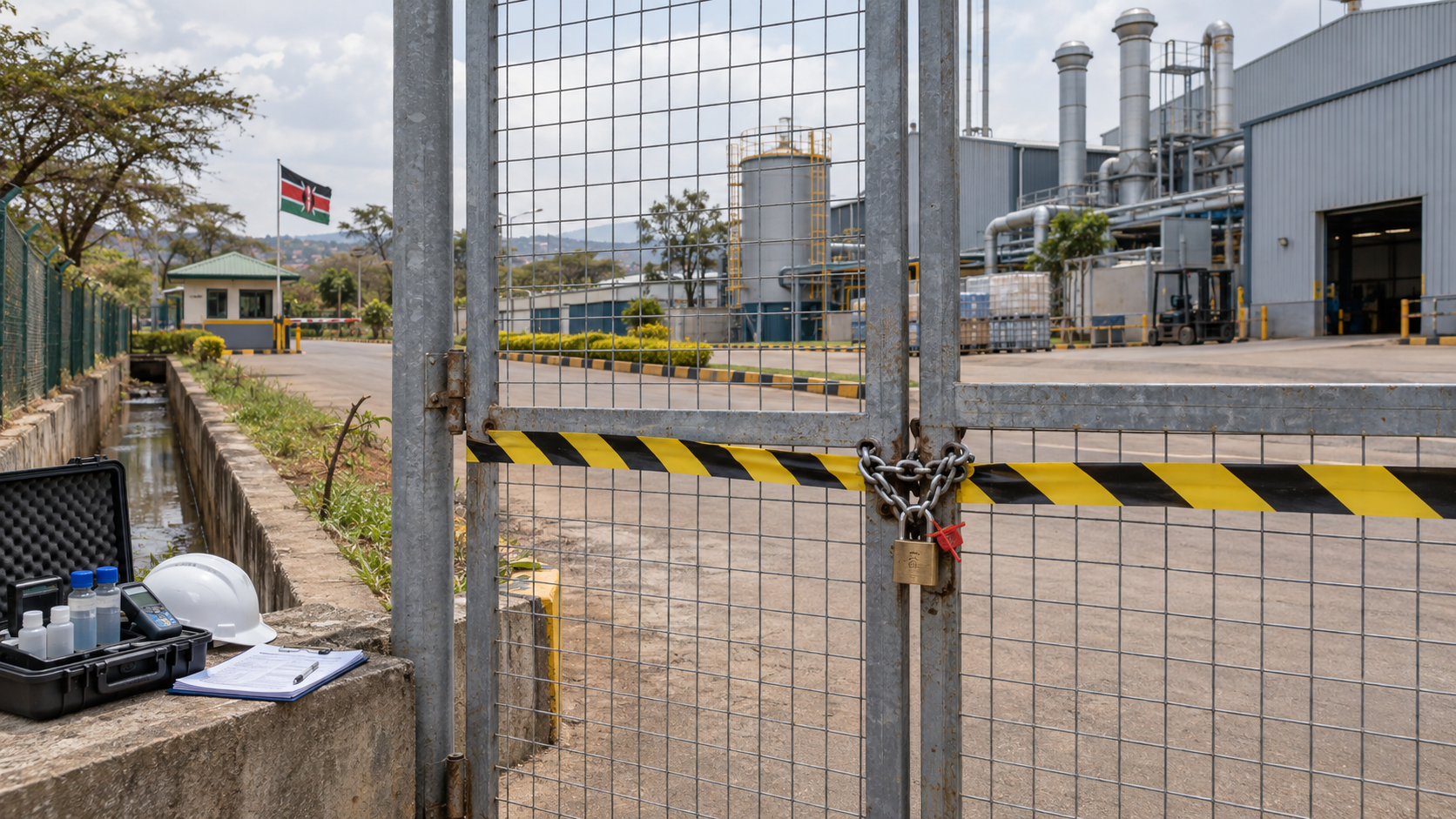
Environmental enforcement can escalate rapidly from an inspection or request for information into a closure directive, environmental restoration order, licence suspension, prosecution or substantial remediation claim. For businesses operating in mining, manufacturing, energy, petroleum, construction, real estate, agriculture, forestry, tourism, water services and waste management, enforcement action is not merely a regulatory problem. It can become an immediate business-continuity, financing, governance and reputational crisis.
An effective response requires the business to protect people and contain any continuing environmental harm while preserving its legal position. It must understand the legal basis and scope of the regulator’s decision, secure relevant evidence, observe applicable appeal deadlines, engage the regulator constructively and, where necessary, seek urgent interim relief. The response must also address the consequences for employees, communities, lenders, insurers, investors, customers and contractual counterparties.
CM Advocates LLP’s Environmental Enforcement Rapid Response Service assists businesses from the first regulatory intervention through investigation, engagement, remediation, reopening, appeal and litigation.
Kenya’s environmental enforcement framework
Article 42 of the Constitution guarantees every person the right to a clean and healthy environment. Articles 69 and 70 impose environmental obligations and provide mechanisms through which environmental rights may be enforced.
The principal statutory framework is the Environmental Management and Co-ordination Act, 1999 (“EMCA”), supported by legislation and regulations governing environmental impact assessment, air quality, water, waste, hazardous substances, forests, wildlife, mining, petroleum, public health, land use and occupational safety.
The National Environment Management Authority (“NEMA”) is the principal environmental regulator. Depending on the nature of the business and the alleged contravention, enforcement may also involve the Water Resources Authority, the Kenya Forest Service, the Kenya Wildlife Service, mining, energy and petroleum regulators, county governments, public-health authorities, the Directorate of Occupational Safety and Health Services and other lead agencies.
A single environmental incident may therefore result in several simultaneous or sequential investigations. For example, an industrial discharge may engage NEMA, the Water Resources Authority, county public-health authorities and occupational-safety agencies. If the incident affects community land, wildlife, forests or a protected ecosystem, additional regulators and affected communities may become involved.
The business must establish at the outset which agency is acting, the statutory power being exercised, the activity or facility under investigation and whether the decision affects the entire operation or only a particular process, licence or site.
Forms and consequences of environmental enforcement
Environmental enforcement may begin with an inspection, information request, sampling exercise or compliance notice. It may progress to an environmental restoration or improvement order, stop-work direction, closure directive, licence suspension, refusal to renew an approval, seizure of equipment, administrative penalty or criminal investigation.
Under sections 108 and 109 of EMCA, an environmental restoration order may require a person to prevent, stop or discontinue an activity; restore damaged land or natural resources; remove waste; prevent or control pollution; compensate affected persons; or undertake specified remedial measures. An order may therefore impose obligations whose cost and duration substantially exceed the immediate financial penalty.
Closure can interrupt production, affect employment, prevent performance of supply and offtake agreements, trigger defaults under financing documents and expose the business to claims by customers, communities and other affected parties. Public regulatory statements may compound the disruption by damaging investor confidence and the business’s social licence to operate.
Environmental enforcement must consequently be managed as an enterprise-wide event. The legal response must be integrated with technical containment, business continuity, stakeholder engagement, insurance, finance and corporate communications.
Lawful enforcement and procedural fairness
The constitutional importance of environmental protection does not remove the regulator’s obligation to act within the law. Article 47 of the Constitution and the Fair Administrative Action Act, 2015 require administrative action to be expeditious, efficient, lawful, reasonable and procedurally fair.
Depending on the governing statute and the urgency of the environmental risk, an affected business should ordinarily receive adequate notice of the alleged contraventions, the factual and legal basis of the proposed action, access to the material relied upon, a reasonable opportunity to respond and written reasons for the final decision. The business should also be informed of any available review or appeal process.
There will be circumstances in which immediate intervention is necessary to prevent serious or irreversible environmental harm. In such cases, a regulator may be entitled to act before completing an extended hearing process. Nevertheless, the decision must have a proper statutory foundation, be supported by available evidence and remain proportionate to the risk being addressed.
A proper assessment should consider whether the decision-maker possessed the necessary authority, whether the findings are supported by reliable inspection or scientific evidence, whether relevant representations were considered and whether complete closure was necessary. In some circumstances, the legitimate regulatory objective may be achieved through the suspension of a particular activity, enhanced monitoring, corrective works, revised licence conditions or phased operations.
Procedural unfairness does not excuse an established environmental violation. It may, however, justify reconsideration, variation, appeal or judicial review where the process or remedy was materially unlawful, unreasonable or disproportionate.
The first 24 hours: safety, control and evidence
The first 24 hours frequently determine whether the business will be able to respond effectively. Management should immediately activate a central response team led by senior management and legal counsel. The team should ordinarily include environmental and safety personnel, operations and engineering representatives, communications advisers and appropriately qualified technical experts.
A single authorised person should coordinate engagement with the regulator. Employees should cooperate with lawful inspections but refer substantive interviews, document requests and technical explanations to the response team. Statements made during an inspection can later become important evidence and should not be speculative or based on incomplete information.
The business should verify the identity and authority of inspecting officers, record the time and scope of the inspection, obtain copies of all notices and document what was inspected, copied, sampled, photographed, seized or removed. Where materials or equipment are taken, the business should request an inventory and preserve an accurate chain of custody.
All potentially relevant records should be secured. These may include environmental licences, EIA or ESIA reports, environmental management plans, annual audit reports, laboratory results, monitoring data, incident and maintenance logs, water-abstraction and discharge records, waste-transfer documentation, contractor records, internal correspondence, community complaints, photographs and video footage.
No document, data, sample or physical evidence should be altered, concealed or destroyed. A formal document-preservation notice should be issued where litigation, prosecution or a material claim is reasonably anticipated.
The response should also protect legal privilege. Internal investigations, legal assessments and expert instructions should be structured through counsel where appropriate. The mere involvement of a lawyer does not automatically make every communication privileged, and ordinary operational or compliance records should not be improperly characterised as legal advice.
At the same time, the business must take reasonable steps to contain any continuing environmental risk. Equipment may need to be isolated, affected operations suspended, emissions or discharge stopped, areas secured and regulators or emergency services notified. Corrective actions should be carefully documented and, where possible, guided by qualified experts.
The business must then determine the precise effect of the enforcement decision. A broadly worded notice should not automatically be interpreted as closing every part of an enterprise. Equally, uncertainty should not be treated as permission to resume operations. Clarification should be obtained in writing.
The first 72 hours: legal and technical assessment
Within 72 hours, the business should complete a privileged preliminary assessment of the factual, technical and legal position.
The legal review should identify the statutory authority relied upon, the person who made the decision, the date and method of service, the alleged violations, the licences affected and the consequences of non-compliance. It should establish whether the decision is provisional or final, whether further representations may be made and what appeal, reconsideration or judicial-review mechanisms are available.
The technical review should assess the source, nature, extent and duration of the alleged environmental harm. It should determine whether the regulator’s inspection, sampling and laboratory evidence is reliable and whether contractors, third parties, pre-existing contamination or external events may have contributed to the incident.
Independent sampling may be necessary, particularly where causation or the extent of pollution is disputed. Any sampling programme should follow a recognised methodology, use accredited laboratories where appropriate and maintain a documented chain of custody. Poorly designed sampling can undermine an otherwise credible challenge.
The business should also examine its compliance history, including licence conditions, previous inspection reports, regulator correspondence and the implementation of earlier recommendations. The existence of a valid EIA licence does not, by itself, establish continuing compliance. Operational permits, annual environmental audits, effluent and emission licences, waste documentation and other sector-specific approvals must also be reviewed.
This assessment should distinguish among matters that can be admitted and corrected, matters requiring clarification and allegations that are unsupported or disputed. A response that denies every concern may undermine credibility. Conversely, an unnecessarily broad admission may expose the business to prosecution, civil liability, insurance difficulties and contractual claims.
Constructive engagement and corrective action
Constructive regulatory engagement will often offer the fastest route to reopening. The business may request the inspection report and technical material relied upon, a joint site inspection, confirmatory sampling, clarification of the order’s scope or reconsideration of particular restrictions.
Where deficiencies are identified, the business should prepare a detailed corrective action or environmental remediation plan. The plan should describe the alleged or confirmed non-compliance, immediate containment measures, corrective and preventive actions, responsible personnel, implementation dates, monitoring arrangements and independent verification. It should also identify objective conditions for partial or full resumption of operations.
The proposal should be technically credible and financially supported. It may provide for limited operations subject to independent supervision, enhanced monitoring, periodic reporting and defined compliance milestones. Where complete closure is unnecessary to manage the identified risk, a phased reopening proposal may protect both the environment and the legitimate interests of employees, customers and communities.
Regulatory engagement should proceed without prejudice to available legal remedies. Discussions with the regulator do not ordinarily suspend statutory filing periods. Any variation, suspension or withdrawal of an order should be confirmed in writing. Informal assurances should not be treated as authorisation to reopen.
Appeals and judicial review
Section 129 of EMCA permits appeals to the National Environment Tribunal against specified decisions, including decisions concerning environmental licences and the imposition of environmental restoration or improvement orders.
Certain appeals must be lodged within 60 days. Depending on the statutory provision engaged, this period may be strict and incapable of extension. The precise decision, the applicable subsection, the date of the relevant event or service and the standing of the appellant must therefore be examined immediately.
The National Environment Tribunal has distinguished appeals under sections 129(1) and 129(2), particularly in relation to subject matter, standing and limitation.
Where continued enforcement may result in irreversible consequences, an appeal should ordinarily be accompanied by an urgent application for appropriate interim relief. A business should not assume that the mere filing of an appeal authorises it to resume operations. The legal effect of the appeal and any interim orders must be expressly confirmed.
Judicial review may be appropriate where the regulator acted without or in excess of jurisdiction, denied a fair hearing, failed to provide reasons, relied on irrelevant considerations, disregarded material evidence, acted irrationally or used statutory power for an improper purpose.
The correct forum and procedure are critical. Courts ordinarily require parties to exhaust an available statutory remedy unless a recognised exception applies. Proceedings commenced prematurely or in the wrong forum may delay relief while the enforcement decision remains operational.
Interim relief and business continuity
An application for interim relief should address both the business impact and the public interest in environmental protection. Evidence of financial loss alone may be insufficient.
The business should explain the apparent legal or procedural defects in the decision, the environmental safeguards already implemented, whether any harm is continuing and the steps taken to contain or remediate it. It should also demonstrate the effect of closure on employees, communities, essential services, customers, financing obligations and supply chains.
Where appropriate, the application should propose supervised or limited operations supported by independent monitoring, reporting and defined compliance conditions. A carefully structured proposal is likely to be more persuasive than a request for unconditional reopening that does not address the regulator’s underlying concerns.
Board, lender and investor responsibilities
A material enforcement action should be escalated promptly to the board. Directors must ensure that the company has adequate systems to investigate the incident, prevent further harm, comply with lawful directions and supervise remediation.
The board should receive accurate and sufficiently frequent information concerning the legal position, technical findings, financial exposure, regulatory engagement and reopening strategy. Decisions and the reasons supporting them should be properly documented.
Management should review financing documents, insurance policies, shareholder agreements, concessions, leases, supply contracts and material licences. A closure directive or licence suspension may trigger notification obligations, events of default, material-adverse-change provisions or rights of termination. Delay in notifying an insurer may prejudice coverage.
Environmental incidents may also generate personal exposure for directors and officers where offences are committed with their consent, connivance or neglect, subject to the applicable statutory provisions. Governance oversight should therefore be substantive rather than merely formal.
Public statements must be accurate, measured and consistent with the legal and technical record. An unsupported denial, premature admission or inconsistency between public communications and regulatory submissions may affect the appeal, insurance recovery, stakeholder confidence and related civil proceedings.
International environmental and social Standards
For projects financed by development finance institutions or Equator Principles financial institutions, compliance with Kenyan law may represent only the minimum standard.
The IFC Performance Standards, particularly Performance Standard 1, contemplate an environmental and social management system proportionate to project risks. This includes organisational capacity, emergency preparedness, stakeholder engagement, monitoring and corrective action.
The Equator Principles similarly require qualifying projects to identify, assess and manage environmental and social risks through appropriate management plans, stakeholder engagement and, where necessary, independent review and monitoring.
Businesses may also be required to comply with ISO 14001, the World Bank Group Environmental, Health and Safety Guidelines, industry-specific good international industry practice and lender environmental and social action plans.
An enforcement incident may consequently constitute not only a breach of domestic law but also a default under financing arrangements, project agreements, concession documents or investor policies. The response should assess these overlapping obligations at the outset.
Avoiding common response failures
The most damaging mistakes often arise from delay, fragmented decision-making and lack of reliable evidence. A business should not continue affected operations without written authority, assume that discussions have stopped an appeal period or permit different departments to provide conflicting accounts.
Records should never be altered or retrospectively reconstructed. Sampling should not be undertaken without a defensible protocol. Management should not rely exclusively on an EIA licence while overlooking continuing operational obligations.
The business should also avoid treating the dispute purely as litigation. Even where an order is legally defective, legitimate environmental risks may still require correction. Conversely, a technically sound remediation programme should not replace the timely protection of legal rights.
Preparing before an enforcement event
The most effective enforcement response begins before an inspection or incident occurs. Environmentally sensitive businesses should maintain a central register of licences, permits, conditions and renewal dates. Periodic legal and technical audits should test actual compliance rather than the mere existence of approvals.
The business should maintain a documented environmental and social management system, an incident escalation protocol, a regulatory notification matrix and an emergency response plan. Board responsibility for environmental risk should be clearly allocated.
Contractors, transporters and waste handlers should be subject to appropriate due diligence and contractual controls. Sampling, monitoring and chain-of-custody procedures should be documented. Community grievances should be recorded and addressed before they develop into regulatory complaints or litigation.
Insurance coverage should be reviewed periodically to determine whether it adequately addresses environmental impairment, clean-up costs, third-party liability, regulatory investigations and business interruption. Businesses should also monitor NEMA’s public notices and relevant sector developments as part of their compliance framework.
How CM Advocates LLP can assist
CM Advocates LLP’s Natural Resources & Biodiversity Practice, working with the Sustainability, Climate Change & ESG Practice and the Dispute Resolution & Appellate Practice Group, provides an integrated Environmental Enforcement Rapid Response service.
We assist with the immediate legal review of inspection notices, restoration orders, improvement orders, licence suspensions and closure directives. We conduct privileged internal investigations, preserve evidence and coordinate environmental, scientific and engineering experts.
Our teams prepare regulatory representations, corrective action plans and remediation frame-works; negotiate reconsideration, variation and phased reopening; and pursue urgent appeals, judicial review and interim relief. We also advise boards on lender, insurer, investor and contractual notifications and defend environmental prosecutions, compensation claims and related civil proceedings.
Following resolution of the immediate incident, we assist clients to strengthen governance, environmental management systems, licence controls, board oversight, contractor management and regulatory readiness.
Contact Us:
For urgent assistance concerning an environmental inspection, investigation, restoration or improvement order, licence suspension, closure directive, environmental prosecution or related dispute, please contact:
Sustainability, Climate Change & ESG Practice
E: disputeresolution@cmadvocates.com
Natural Resources & Biodiversity Practice
Dispute Resolution & Appellate Practice Group
CM Advocates LLP – Contact Details
Head Office Nairobi
I&M Bank House, 7th Floor, 2nd Ngong Avenue
T: +254 20 2210978 or +254 716 209673
P.O. Box 22588 – 00505, Nairobi Kenya
Mombasa Office
Links Plaza, 3rd Floor, Links Road, Nyali
T: +254 041 447 0758 / +254 41 447 0548
P.O. Box 90056 – 80100, Mombasa Kenya
E: mombasaoffice@cmadvocates.com
Regional Presence
Uganda | Tanzania | Rwanda | Zambia | Ethiopia | South Sudan
Disclaimer: This Regulatory Alert is intended for general information only and does not constitute legal advice. Specific advice should be obtained