CM REGULATORY ALERT
Executive summary
Kenya's agricultural sector presents significant opportunities for international seed companies, plant breeders, horticultural and floriculture enterprises, commercial farmers, agricultural research institutions, biotechnology businesses, food processors, distributors and foreign investors. However, importing plants, seeds, planting materials and agricultural commodities into Kenya requires compliance with a multilayered regulatory framework governing plant health, crop production, seed certification, agricultural trade and intellectual property.
This Regulatory Alert examines the interaction between KEPHIS, the Agriculture and Food Authority (AFA), plant quarantine, seed regulation, variety release, intellectual property protection and international agricultural investment. It also identifies the principal compliance obligations, commercial risks and practical considerations for businesses entering or expanding within Kenya’s agricultural market.
-
Understanding Kenya's Plant Import Regulatory Framework
KEPHIS mandates that all agricultural trade must be declared and managed through the Integrated Export-Import Certification System (IEICS). IEICS is the exclusive business-to-government digital portal for plant health, biosecurity and trade compliance.
The core legal objectives of the system are:
-
Processing applications for mandatory Plant Import Permits;
-
Conducting regulatory assessments and pest risk analyses on incoming plant tissue, seeds, and biological agents;
-
Dynamic communication and enforcement of phytosanitary import conditions to protect local agriculture from quarantine pests and diseases; and
-
Streamlining regulatory documentation and border verification at ports of entry.
Importers must submit applications, upload supporting documents and pay statutory fees through the IEICS portal, which is accessed via the Kenya eCitizen platform. To maintain regulatory compliance, businesses must obtain an approved Plant Import Permit via IEICS before the consignment departs the country of origin. Non-compliant cargo is subject to immediate interception, seizure, mandatory destruction or deportation at the importer’s sole cost.
-
Principal Legislation Governing Plant Imports and Agricultural Trade
Kenya’s plant import, seed regulation and crop-sector compliance framework involves several complementary statutes.
-
Plant Protection Act (Cap. 324)
The Plant Protection Act establishes the principal statutory framework for preventing and controlling the introduction and spread of plant pests and diseases. It supports phytosanitary import controls, inspections, quarantine, restrictions and other plant health measures.
-
Kenya Plant Health Inspectorate Service Act, 2012
The Act establishes KEPHIS and provides the institutional framework for its functions concerning plant health, seed quality, plant varieties and related regulatory matters.
-
Crops Act, 2013 (No. 16 of 2013)
The Crops Act provides a framework for the development, regulation, production, processing and marketing of scheduled agricultural crops.
The Act provides for the regulation of scheduled crops and subsidiary legislation governing activities that may include crop production, marketing, processing, quality standards, farm inputs and commercial arrangements.
-
Agriculture and Food Authority Act, 2013 (No. 13 of 2013)
The Act establishes AFA and provides for its functions in regulating and promoting relevant agricultural sectors. It also addresses the respective roles of national and county governments in agricultural administration.
-
Seeds and Plant Varieties Act (Cap. 326)
The Act regulates seed transactions, testing, certification, plant variety registration and plant breeders’ rights. Imported seeds intended for commercial production, multiplication or marketing may therefore be subject to additional requirements beyond phytosanitary import authorization.
-
International legal framework
Kenya's plant health controls operate within the wider framework established by the International Plant Protection Convention (IPPC) and relevant International Standards for Phytosanitary Measures (ISPMs).
The World Trade Organization Agreement on the Application of Sanitary and Phytosanitary Measures also provides an important framework governing the relationship between plant health protection and international trade.
-
KEPHIS and AFA: Understanding their Respective Regulatory Mandates
KEPHIS and AFA perform distinct but overlapping regulatory functions.
|
Regulatory authority |
Principal responsibilities |
|
KEPHIS |
Plant Import Permits, phytosanitary certification, quarantine, seed certification, variety testing and release, and plant breeders' rights administration |
|
AFA |
Regulation of scheduled crops and specified activities involving their production, processing, marketing, importation and exportation |
|
KRA |
Customs administration, import and export declarations, and applicable taxes |
|
KenTrade |
Electronic trade facilitation and relevant documentation processes |
|
National Biosafety Authority |
Regulation of activities involving genetically modified organisms |
|
County governments |
Applicable devolved agricultural functions, permits and local regulatory requirements |
When both KEPHIS and AFA approvals may be required
An importer may need approvals from both KEPHIS and AFA where the commodity is subject to phytosanitary controls and the relevant crop-sector regulations impose additional registration, licensing or permit requirements.
For example, an agricultural business importing regulated horticultural produce may require phytosanitary documentation and applicable AFA authorisation. Similarly, an international investor establishing a commercial crop production or processing enterprise may need to address AFA requirements independently of KEPHIS plant health approvals.
-
The Crops Act, 2013: Implications for Plant Importers and Agricultural Investors
The Crops Act, 2013 regulates the production, processing, marketing and commercial handling of scheduled crops in Kenya. Administered by the Agriculture and Food Authority (AFA), the Act establishes distinct legal obligations for agricultural investors and commercial entities.
Scheduled Crops
The Act applies strictly to commodities listed under its First Schedule. Agricultural investors and plant importers must verify their specific crop’s classification before commencing operations. This classification determines whether the crop requires compulsory breeding program certification such as tea, coffee, and sugarcane or falls under standard, non-certified agricultural categories.
-
Who must obtain a Plant Import Permit?
KEPHIS requires a Plant Import Permit before shipment of plants, plant products and regulated articles into Kenya. The requirement is not confined to commercial importers. It may apply to:
-
Seed companies and agricultural input suppliers.
-
Horticultural and floriculture enterprises.
-
Plant breeders and agricultural research institutions.
-
Universities and research laboratories.
-
Commercial farms and agricultural estates.
-
Nurseries and tissue culture enterprises.
-
Biotechnology companies.
-
Importers of ornamental plants.
-
Individuals importing plants or seeds as gifts or for personal use.
-
Businesses importing materials for trials or experimental purposes.
Duty-free treatment or the absence of a commercial transaction does not automatically exempt imported materials from phytosanitary requirements.
-
Plant Import Permit Applications: Step-By-Step Compliance
Stage 1: Identify the commodity
Confirm the scientific name, commercial identity, variety where relevant, quantity, country of origin and intended use.
Stage 2: Establish import eligibility
Determine whether the commodity is permitted and identify the applicable phytosanitary conditions.
Stage 3: Identify additional approvals
Assess whether AFA registration, crop-sector licences, seed import authorisation, variety release or other regulatory approvals are required.
Stage 4: Submit the application
Apply through the designated KEPHIS electronic platform and provide the required documentation.
Stage 5: Regulatory assessment
KEPHIS assesses the proposed importation and determines applicable conditions.
Stage 6: Obtain the Plant Import Permit
The importer should obtain the permit before shipment and communicate its conditions to the exporter.
Stage 7: Arrange phytosanitary certification
The exporter should obtain the required phytosanitary certificate from the competent authority in the exporting country.
Stage 8: Complete pre-shipment compliance
Complete any required inspections, treatments or additional declarations.
Stage 9: Present the consignment for inspection
Upon arrival, declare the consignment and comply with applicable KEPHIS and customs procedures.
Stage 10: Obtain release or comply with further directions
Release may be subject to inspection, testing, quarantine or other regulatory conditions.
-
Plant Import Permits and Phytosanitary Certificates
A Plant Import Permit and a phytosanitary certificate serve different purposes. The Plant Import Permit is issued by KEPHIS and specifies the conditions under which relevant materials may enter Kenya.
The phytosanitary certificate is issued by the competent plant protection authority in the exporting country and confirms compliance with the applicable plant health requirements. Importers should ensure that:
-
Documentation accurately identifies the consignment.
-
Required declarations are included.
-
Applicable treatments are completed.
-
The certificate satisfies permit conditions.
-
The consignment is presented for inspection upon arrival.
-
Plant Quarantine and Pest Risk Assessment
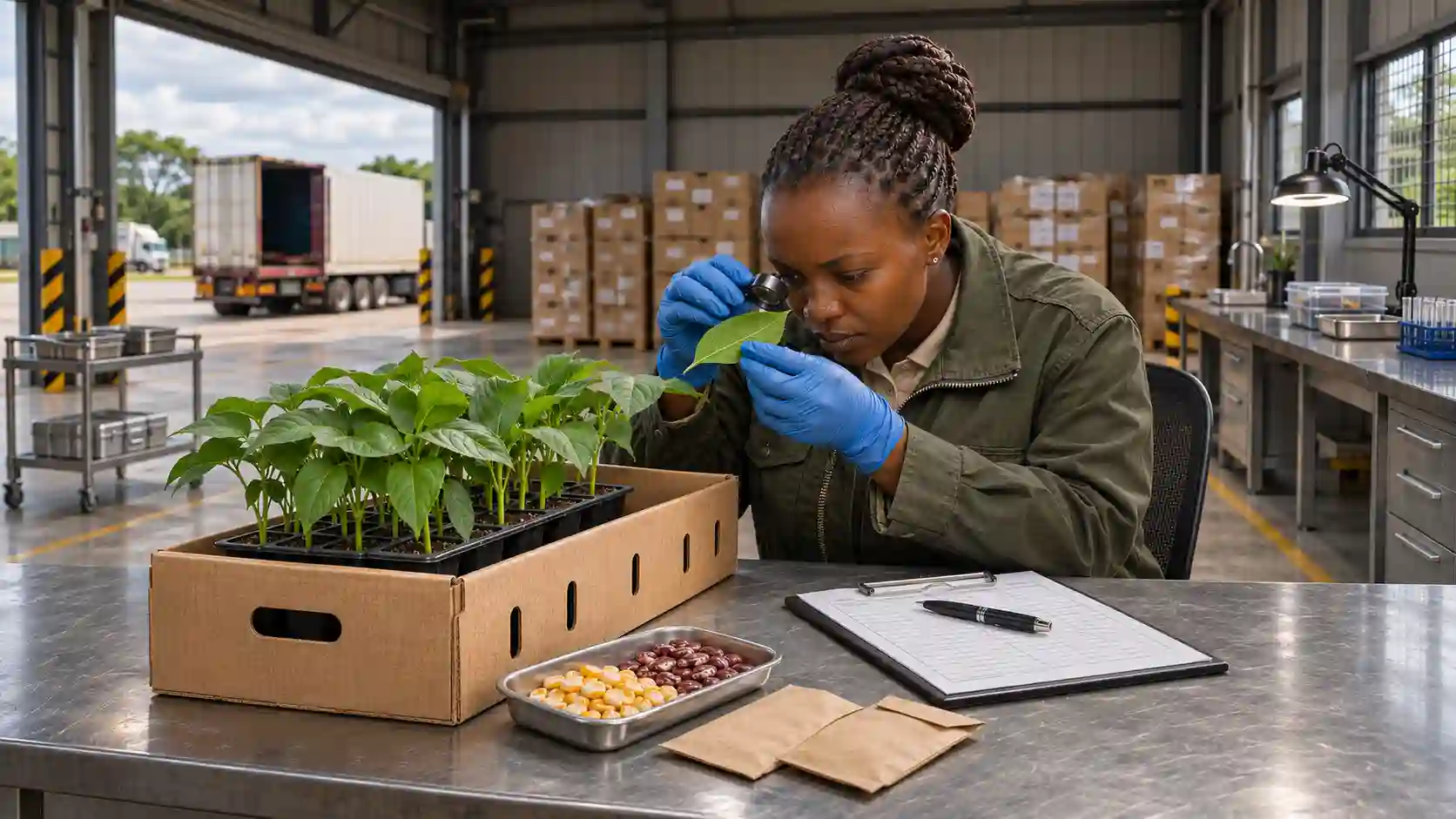
Plant quarantine is central to Kenya’s agricultural biosecurity framework, administered by KEPHIS.
Import Categories & Risk Assessment
KEPHIS classifies plant imports into three categories: permitted under specified conditions, requiring quarantine or strictly prohibited. Import conditions are determined by a Pest Risk Analysis (PRA) based on the plant species, country of origin, pest prevalence, and intended use.
Post-Entry Quarantine & Non-Compliance
High-risk planting materials must undergo post-entry quarantine for inspection, monitoring and diagnostic testing before release. Consignments that fail to satisfy these phytosanitary requirements face regulatory action, including detention, treatment, re-exportation, or destruction at the importer's expense. Consequently, agricultural investors should explicitly allocate these commercial risks in their supply and logistics agreements.
-
Importing Seeds into Kenya: Additional Regulatory Requirements
Commercial seed importation may require compliance with the Seeds and Plant Varieties Act in addition to phytosanitary import controls. Depending on the crop and activity, relevant requirements may include:
-
Seed merchant registration.
-
Seed import authorisation.
-
Variety registration or release.
-
Seed quality testing.
-
Certification requirements.
-
Packaging and labelling standards.
-
Authorisation to market or distribute seed.
-
National Performance Trials (NPT): Regulatory Framework
National Performance Trials form an important part of Kenya's plant variety evaluation and release framework. Relevant instruments include:
-
Seeds and Plant Varieties Act (Cap. 326).
-
Seeds and Plant Varieties (National Performance Trials) Regulations, 2009.
-
Seeds and Plant Varieties (Variety Evaluation and Release) Regulations, 2016.
KEPHIS administers the relevant testing processes.
Purpose of NPT
NPTs assess the agronomic performance and suitability of new plant varieties under relevant Kenyan growing conditions. Depending on the crop, the assessment may consider:
-
Yield potential.
-
Maturity and growth characteristics.
-
Disease and pest resistance.
-
Quality characteristics.
-
Environmental adaptability.
-
Performance under different agroecological conditions.
-
Other prescribed crop-specific characteristics.
-
National Performance Trials: Application and Testing Process
A breeder, seed company or research institution may submit an application for variety testing through the applicable KEPHIS system. Supporting information may include variety descriptions, breeding history, seed samples and preliminary trial data.
Following successful evaluation and approval, a variety may be entered in the applicable National Variety List. Commercial seed production and marketing remain subject to any additional regulatory requirements.
-
NPT Application Windows and Commercial Planning
KEPHIS's published 2026 guidance identifies two principal testing seasons for rain-fed crops.
|
Testing season |
Published application window |
Indicative trial period |
|
Long rains |
1 December–15 February |
March/April–September |
|
Short rains |
15 July–31 August |
October/November–February |
|
Irrigated trials |
Subject to applicable arrangements |
Depends on crop cycle |
Seed companies should incorporate testing timelines into product launches, financing, distribution agreements and investment plans.
-
Plant Breeders' Rights and International Intellectual Property Protection
Plant breeders' rights protect qualifying proprietary interests in new plant varieties. Kenya's plant variety protection framework is established principally under the Seeds and Plant Varieties Act.
Kenya is a member of the International Union for the Protection of New Varieties of Plants (UPOV). However, UPOV membership does not automatically confer Kenyan plant breeders' rights or commercial marketing approval on varieties registered in another jurisdiction.
Businesses should consider:
-
Registration of plant breeders' rights.
-
Ownership and assignment of rights.
-
Variety licensing agreements.
-
Seed multiplication and propagation rights.
-
Royalty arrangements.
-
Technology transfer agreements.
-
Protection of confidential breeding information.
-
Enforcement against unauthorised commercial exploitation.
-
Importing Plants and Seeds for Research and Experimental Purposes
Research institutions, universities, biotechnology companies and plant breeders frequently import plant materials for testing, breeding and scientific evaluation.
Such imports remain subject to applicable phytosanitary requirements. Importers should consider:
-
Plant Import Permit requirements.
-
Research-specific permit conditions.
-
Quarantine and containment obligations.
-
Material transfer agreements.
-
Intellectual property ownership.
-
Confidentiality and permitted use.
-
Applicable biosafety requirements.
-
Restrictions on onward transfer or commercialisation.
Permission to import materials for research does not automatically authorise commercial production or distribution.
-
Regulatory Enforcement and Legal Remedies
Non-compliance with plant import or crop-sector regulatory requirements exposes businesses to significant commercial and legal consequences.
Depending on the applicable legislation and circumstances, these may include:
-
Detention of consignments.
-
Additional inspection or testing.
-
Mandatory treatment.
-
Quarantine.
-
Refusal of entry.
-
Re-exportation.
-
Destruction.
-
Suspension or cancellation of applicable authorisations.
-
Penalties or prosecution.
-
Contractual and financial losses.
How we can Assist
CM Advocates LLP advises Kenyan and international seed companies, plant breeders, horticultural businesses, nurseries, agricultural research institutions, commercial growers, importers, exporters and investors on plant importation, agricultural regulation and crop-sector compliance. Our services include:
-
Plant Import Permit applications and compliance.
-
Phytosanitary import requirements.
-
Plant quarantine and consignment detention matters.
-
Crops Act and AFA regulatory compliance.
-
Scheduled crop registration, licensing and permits.
-
Seed importation and regulatory approvals.
-
Plant variety evaluation, registration and release.
-
Seed certification, production and distribution.
-
Plant breeders' rights registration, licensing and enforcement.
-
Agricultural biotechnology and biosafety compliance.
-
International seed supply and distribution agreements.
-
Agricultural intellectual property and technology commercialisation.
-
Cross-border agricultural trade and regional market entry.
-
Regulatory due diligence, transaction structuring and investor protection.
Our Agriculture, Food & Estates Practice works closely with the firm's Intellectual Property, Brands & Commercialization Practice and BRAND Unit to provide integrated legal advice across plant health regulation, crop-sector compliance, agricultural innovation, international trade, investment and intellectual property.
Contact our Agriculture, Food & Estates (AFE) Practice
For legal advice on PIQRS, Plant Import Permits, KEPHIS regulation, the Crops Act, AFA licensing, plant quarantine, seed imports, National Performance Trials, variety release, plant breeders' rights, international agricultural trade and foreign investment, please contact our specialist teams.
Agriculture, Food & Estates (AFE) Practice
E: AFE@cmadvocates.com
Intellectual Property, Brands & Commercialization (IPBC) Practice
E: ipbc@cmadvocates.com
Brand Rights, Anti-Counterfeiting & New Developments (BRAND) Unit
E: brandprotection@cmadvocates.com
CM ADVOCATES LLP
Head Office – Nairobi
I&M Bank House, 7th Floor
2nd Ngong Avenue
Nairobi.
Mombasa Office
Links Plaza, 3rd Floor
Links Road, Nyali
Mombasa.
E: mombasaoffice@cmadvocates.com
Regional Presence
Uganda | Tanzania | Rwanda | Zambia | Ethiopia | South Sudan
Disclaimer: This publication provides general legal information and does not constitute legal advice. Import, quarantine, crop-sector licensing, variety testing and certification requirements vary according to the commodity, country of origin, intended use and applicable legislation. Businesses should confirm current requirements with KEPHIS, AFA and other relevant authorities and obtain transaction-specific legal advice.
© 2026 CM Advocates LLP. All Rights Reserved.
Protecting Innovation. Preserving Value. Powering Commercial Growth.